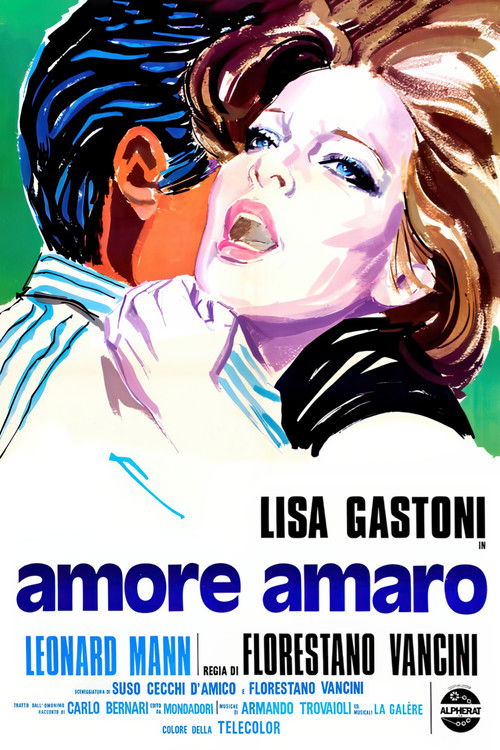
Amore amaro
1974
No user ratings available yet
Representation score: 4.3 out of 10
Representation Score
Limited
1968
RDirector
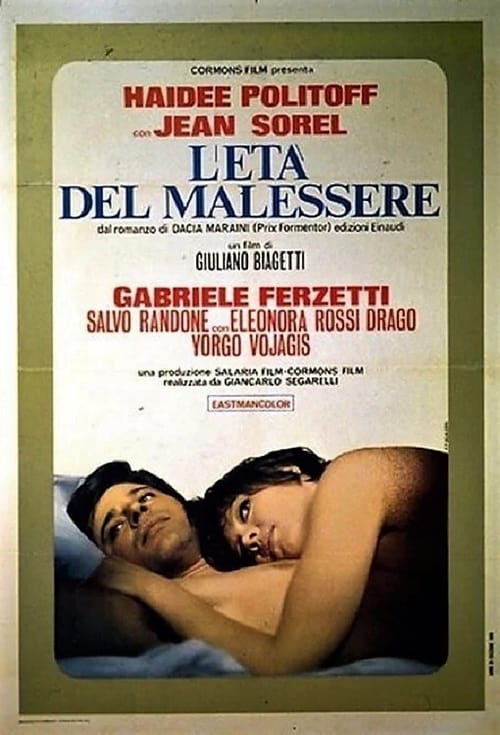
Giuliano Biagetti
Runtime
101 minutes
Average Rating
No ratings yetNew Showbiz Analysis
Love Problems is a product of its era, reflecting the shifting social mores of late 1960s Italy. The film engages with the period's preoccupation with the breakdown of traditional Mediterranean social structures and the 'age of malaise.' However, the work lacks documented evidence of diverse representation. While it may critique social stability, it does not provide clear examples of characters who reflect more than one aspect of diversity or diverse casting. Ultimately, the film functions as a period piece that focuses on psychological tensions rather than progressive representation.
Category Breakdown
The film does not include any verified LGBTQ+ identities. While 1960s European cinema sometimes explored non-traditional relationships, there are no specific queer narratives documented here.
The title suggests a focus on psychological and interpersonal tension. This often involves challenging traditional gender roles in 1960s Italian drama, though specific female-driven ability to act remains unverified.
The production context suggests a predominantly white European cast. There is no evidence of significant non-Anglo-Saxon majority representation or race-bent casting within the narrative.
The film likely critiques post-war social stability and traditional institutions. The 'malaise' referenced suggests a preoccupation with moral relativism and the breakdown of established social orders.
There is no available information regarding the inclusion of characters with physical or neurodivergent disabilities.
Present on Screen
Limited or Absent
Official Synopsis
Italian drama.
1974

1957

1979
1961

1980

1960
1979
1977
No reviews yet. Be the first to share your thoughts on this movie!
Use the rating form above to leave a star rating and optional review.