The Girls Are Willing
1958
No user ratings available yet
Representation score: 0.3 out of 10
Representation Score
Limited
1962
Director
Werner Jacobs
Runtime
93 minutes
Average Rating
No ratings yetNew Showbiz Analysis
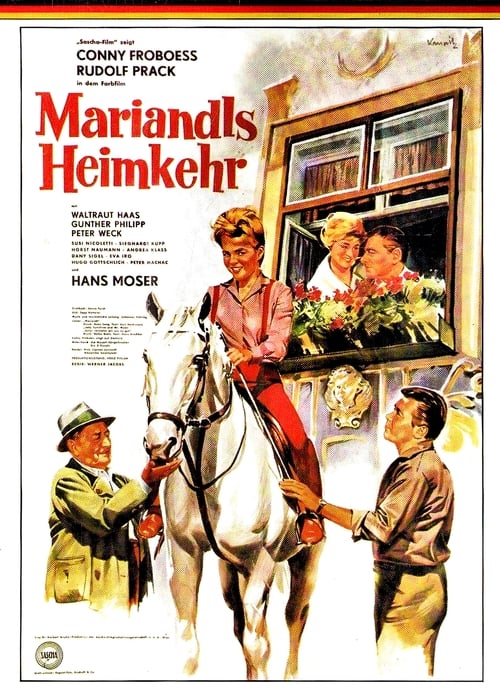
Mariandl's Homecoming is a period-typical domestic comedy that prioritizes the reinforcement of traditional social and familial roles. The narrative focuses on regional heritage and class dynamics, offering little disruption to established norms. Female characters demonstrate competence by organizing benefit concerts to save horses, but their influence remains within traditional domesticity. The film operates within the social hierarchies of its time, presenting a homogeneous world centered on heterosexual romance and familial order.
Category Breakdown
The film follows strict conventions that assume everyone is straight or cisgender, typical of 1960s European cinema. Romantic conflicts center on traditional heterosexual relationships and infidelity. No characters with non-traditional gender identities are present.
Female characters drive the plot through emotional labor and philanthropic actions. Marianne and Mariandl take significant roles, but their influence remains centered on domestic management and traditional feminine virtues.
The setting indicates a highly homogeneous social environment focused on local class dynamics. There is no indication of racial diversity or varied ethnic perspectives within this Austrian cultural study.
The narrative emphasizes regional heritage and traditional family ties. It reinforces conventional social cohesion and Western values through community mechanisms such as benefit concerts.
Character motivations are driven by romance and economic necessity. There is no portrayal of neurodivergence or physical impairment as a central element of the story.
Present on Screen
Limited or Absent
Official Synopsis
After marrying Hofrat Geiger, Marianne moves to Vienna to be with her husband. She runs the household while her daughter attends the music academy. But Mariandl is heartbroken. She constantly catches her Peter in strange situations with other women. Marianne, on the other hand, constantly has to listen to the innuendo of Franzi, Geiger's long-time housekeeper, who would have loved to be a Hofrat herself. Frustrated, mother and daughter decide to leave Vienna and visit their grandfather. He has inherited a dilapidated farm in the Wachau region, where horses are kept, awaiting shipment to Italian slaughterhouses. Through two benefit concerts, the talented music student Mariandl is able to raise enough money to buy the horses' freedom.
1958
1945
1961
1958
1956
1938
1955
1952
No reviews yet. Be the first to share your thoughts on this movie!
Use the rating form above to leave a star rating and optional review.