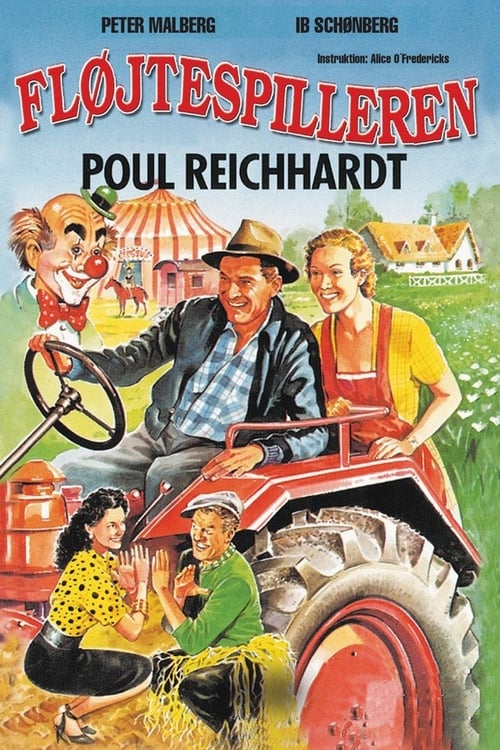
Fløjtespilleren
1953
No user ratings available yet
Representation score: 1.4 out of 10
Representation Score
Minimal
1952
Director
Alice O'Fredericks
Runtime
109 minutes
Average Rating
No ratings yetNew Showbiz Analysis
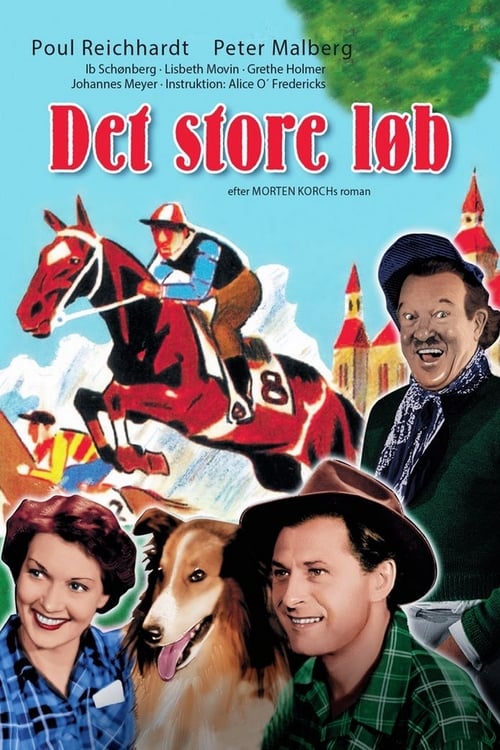
Det store løb is a traditionalist narrative that emphasizes the restoration of patriarchal lineage and the preservation of landed wealth. The plot follows Niels as he tries to reclaim his family estate after his father's passing. The film reinforces mid-century social norms rather than challenging them, focusing on stability, legal inheritance, and the maintenance of established social hierarchies within a Danish context. Ultimately, the work lacks complexity in representing multiple aspects of identity and remains a period-typical drama that upholds conventional familial and economic institutions.
Category Breakdown
The film adheres to traditional mid-century family structures and does not include non-binary gender identities or critiques of heteronormativity.
The story centers around patriarchal themes, focusing on landowner Vilhelm Stone and his son Niels. Women are portrayed primarily through the lens of a failed marriage.
The setting and cast appear ethnically uniform, emphasizing local landownership and national racing traditions. There is no indication of racial diversity or non-Anglo-Saxon characters.
The story upholds traditional Western institutions such as the sanctity of the family estate. It reinforces established social hierarchies and class roles through the depiction of loyal companions.
The film provides no information regarding characters with visible or invisible disabilities.
Present on Screen
Limited or Absent
Official Synopsis
Due to his weakness for women and gambling, the old landowner Vilhelm Stone has ruined his marriage and lost his son and friends. But when he dies, his son Niels returns home from Australia to take over the estate. However, it is not that simple. Lawyers drag out the inheritance case, and initially Niels only inherits the racehorse Ibrahim. Niels is determined to win the big race of the year at the racetrack, and it is here that Poul Reichhardt sings the famous schlager Ibrahim to his horse. In the battle to get the family estate, Niels gets incredible help from his faithful companion, the farmhand Nicholajsen.
1953

1945

2008

1946
1959
2005
1960

2021
No reviews yet. Be the first to share your thoughts on this movie!
Use the rating form above to leave a star rating and optional review.