
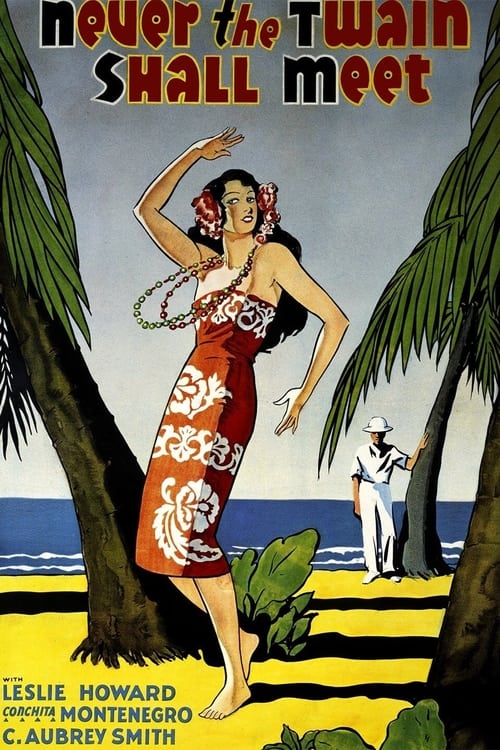
Never the Twain Shall Meet
1925
No user ratings available yet
Representation score: 0.6 out of 10
Representation Score
Limited
1931
PassedDirector
W.S. Van Dyke
Runtime
79 minutes
Average Rating
No ratings yetNew Showbiz Analysis
Never the Twain Shall Meet is a product of early 1930s studio storytelling, adhering closely to the social norms of its time. While it introduces a South Sea island character to provide ethnic diversity, it does so through a lens that reinforces colonial and paternalistic power dynamics. The film relies heavily on traditional archetypes and romantic structures. The central conflict is driven by the male protagonist's actions, and even the inclusion of disability serves merely as a narrative catalyst rather than a meaningful exploration of lived experience. Ultimately, the work operates within established norms rather than challenging them. It uses exoticism and traditional gender roles to drive a plot centered on individual disillusionment.
Category Breakdown
The film does not include any representation of LGBTQ+ identities or non-straight relationships. The story revolves around a traditional love triangle involving Dan, Maisie, and Tamea.
Gender roles in the film follow traditional patterns, focusing on the male protagonist's decisions. Tamea exhibits some ability to act, but Maisie is portrayed as a stereotypical archetype known as 'the icebox.'
Tamea adds ethnic diversity through her South Sea island heritage. However, the narrative risks reinforcing colonial stereotypes by positioning a Western man as her protector.
The story operates within a typical Western framework, often portraying non-Western cultures as paradises. It does not challenge established social structures or Western conventions.
Leprosy is used as a plot device to move the story forward. The condition is not portrayed with nuanced understanding or respect.
Present on Screen
Limited or Absent
Official Synopsis
Dan works for Pritchard and Pritchard out of San Francisco and is in love with Maisie, referred to as "the icebox" by his news reporter friend. As one of his ships returns to San Francisco, Dan learns that the Captain has contracted Leprosy and asks Dan to be the guardian of his South Sea island daughter Tamea. Dan soon learns that Tamea wants him and will do nothing without a kiss. But Tamea soon learns that she is different than Dan and Maisie and that makes her angry. Dan decides to go and live on the island with Tamea, but soon finds out that Paradise is not everything that he thought it was.
1925

1930

1932
1931

1934

1932

1928

1931
No reviews yet. Be the first to share your thoughts on this movie!
Use the rating form above to leave a star rating and optional review.