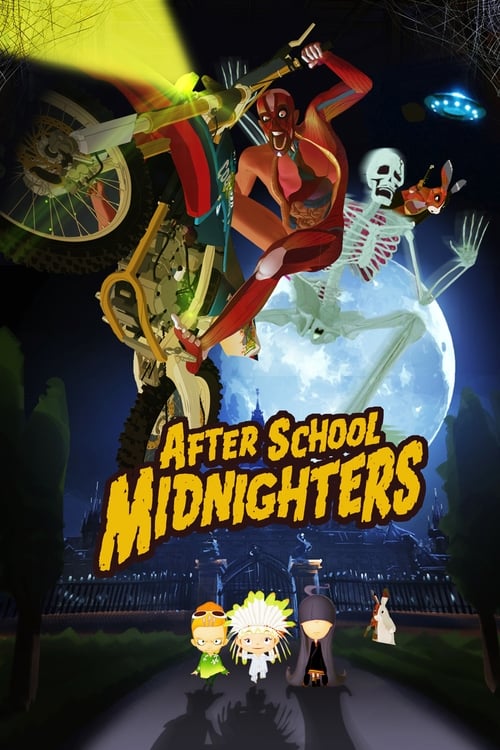
After School Midnighters
2012
No user ratings available yet
Representation score: 4.7 out of 10

Representation Score
Fair
2011
Director
Kazuchika Kise
Runtime
23 minutes
Average Rating
No ratings yetNew Showbiz Analysis
Drawer Hobs offers a nuanced look at domestic life by focusing on a female office worker whose solitary existence is disrupted by supernatural entities. The film successfully challenges the cliché of the isolated urbanite, replacing it with a complex, non-traditional household dynamic. While the narrative provides strong women's ability to drive the story, it remains culturally specific and lacks explicit representation of LGBTQ+ identities or multi-ethnic diversity. The focus is primarily on the intersection of modern life and folk-inspired spirits. Ultimately, the film is a character-driven piece that prioritizes personal experience over rigid social norms, making it a meaningful exploration of unexpected responsibility.
Category Breakdown
The film does not include explicit representations of LGBTQ+ characters or non-straight relationships. It focuses on a female office worker and supernatural spirits rather than exploring queer themes.
The story centers around a female office worker who navigates new domestic responsibilities. This places her in a position of power and disrupts traditional gender roles that typically assign such tasks to men.
Set in a Japanese urban environment, the film focuses on a specific cultural perspective. It does not feature a diverse, multi-ethnic cast based on the information provided.
The inclusion of spirit children brings folk-inspired elements into a contemporary urban setting. This challenges the idea of a secular, controlled city life through supernatural interference.
The film does not depict any characters with physical or neurodivergent disabilities. The spirit children are portrayed as supernatural beings rather than metaphors for human disabilities.
Present on Screen
Limited or Absent
Official Synopsis
The mother of an office lady sends her an old dresser. It's much too big for her small apartment, and the receiver is confused on what to do with it. One night she falls asleep after having a few drinks and wakes up after hearing strange sounds. She sees a child's figure by the table eating some rice crackers just before it slips into the wardrobe, but the wardroebe appears to be empty... Thus her life with six spirit children begins. Submitted by Production I.G for the initial Young Animator Training Project.
2012
2012
2011
2018
1984
2014
2016

2014
No reviews yet. Be the first to share your thoughts on this movie!
Use the rating form above to leave a star rating and optional review.