
Hearts That Do Not Age
1977
No user ratings available yet
Representation score: 2.7 out of 10
Representation Score
Limited
1975
Director
Roland Gräf
Runtime
88 minutes
Average Rating
No ratings yetNew Showbiz Analysis
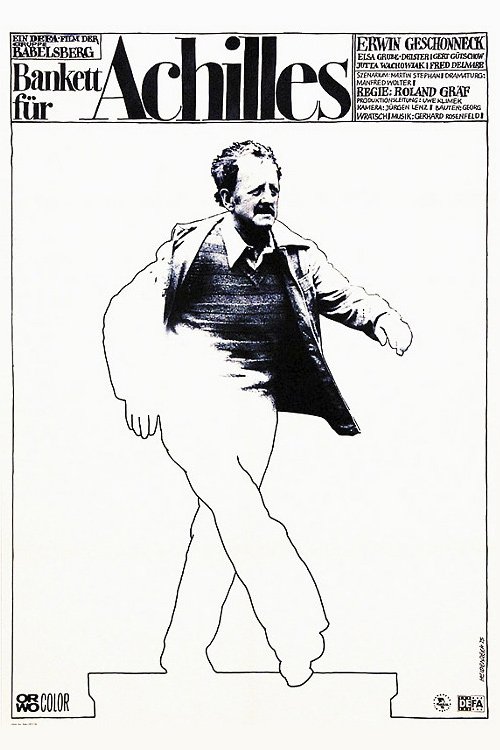
Bankett für Achilles is a period drama set in the socialist realism of 1975 East Germany. Its portrayal of diversity is shaped by the historical context, focusing on the industrial working class of Bitterfeld. The film does not feature contemporary markers of diversity such as racial or LGBTQ+ representation, which aligns with the era's homogeneous society. The narrative revolves around a male protagonist's professional and existential journey. However, the film stands out in its cultural critique. It goes beyond simple state propaganda to explore the tension between individual identity and collective identity, providing a nuanced view of personal meaning outside of industrial roles.
Category Breakdown
The film does not include any explicit LGBTQ+ characters or stories that challenge traditional heterosexual relationships. Instead, it focuses on the lives of workers and a male worker's transition into retirement.
The story centers around the male experience of work and professional identity through the character Karl Achilles. While women may appear among the supporting characters, the main plot follows a traditional male-centric perspective.
Set in 1975 East Germany, the film portrays a predominantly uniform population. The town of Bitterfeld highlights the local industrial workforce without much racial or ethnic diversity.
The film critiques the rigid structures of institutions. It emphasizes the conflict between personal identity and the industrial system, prioritizing individual freedom over state-imposed productivity.
There is no indication of characters with visible or invisible disabilities in the narrative.
Present on Screen
Limited or Absent
Official Synopsis
For thirty years, Karl Achilles has been working at the chemical collective in Bitterfeld. But now his last day as a master at the plant has come. He is about to retire; even if Karl, who finds ending his working life difficult, wanted to stay on, it would not be possible. Karl’s colleagues have arranged a farewell dinner for the retiring master at an outdoor restaurant. But on his last day of work, before the farewell dinner, he meets all sorts of people: both colleagues and people, who do not work at the plant. A mosaic of the biography of a person who found fulfilment in his work and now has to look for the meaning of his life anew.
1977

1924

1982

1961

1976

2007

1979
1962
No reviews yet. Be the first to share your thoughts on this movie!
Use the rating form above to leave a star rating and optional review.