
March 1968
2022
No user ratings available yet
Representation score: 5.5 out of 10
Representation Score
Fair
2009
Director
Tomáš Mašín
Runtime
110 minutes
Average Rating
No ratings yetNew Showbiz Analysis
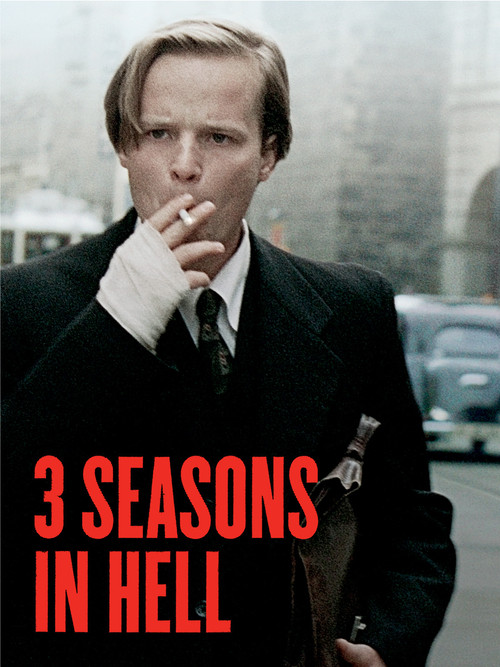
3 Seasons in Hell is a historical drama that prioritizes a critique of totalitarianism over modern diversity. It functions as a period-accurate reflection of mid-century Czechoslovakia, focusing on the individual's struggle against systemic oppression. The film's strength lies in its sophisticated critique of the Communist state and its corrupt institutions. By centering on a nonconformist poet, the narrative challenges the dominance of the regime and celebrates personal autonomy. However, the film lacks breadth in traditional diversity metrics. The focus on a male-centric political struggle and the absence of LGBTQ+ characters or racial diversity limit its inclusiveness.
Category Breakdown
The film centers on the protagonist's rebellious lifestyle and his relationships with women. His sexuality is portrayed as a means of personal rebellion against a puritanical state rather than an exploration of his queer identity.
The narrative disrupts traditional domestic roles through fluid social circles and a nonconformist lifestyle. However, the central political struggle remains heavily focused on the male experience of state surveillance and imprisonment.
The cast is predominantly Czech, reflecting the ethnic homogeneity of 1947 Czechoslovakia. The film maintains historical accuracy without attempting to introduce modern diversity.
The film excels in its critique of the Communist state and its oppressive institutional apparatus. It celebrates bohemianism as a form of resistance against the rigid morality of the regime.
There is no significant evidence regarding the portrayal of visible or invisible disabilities within the narrative.
Present on Screen
Limited or Absent
Official Synopsis
A 19 year old nonconformist poet living in 1947 Czechoslovakia is blind to the Communist behemoth looking over him, and instead lives a bohemian life with sexually liberated girls.
2022
1999
2018
1966

2020
2005

2010

2013
No reviews yet. Be the first to share your thoughts on this movie!
Use the rating form above to leave a star rating and optional review.