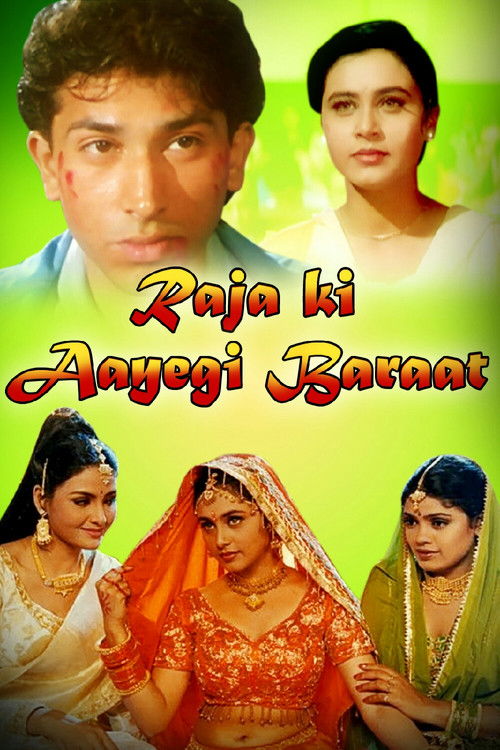
Raja Ki Ayegi Baraat
1997
No user ratings available yet
Representation score: 3.0 out of 10

Representation Score
Good
1983
Director
Dilip Chitre
Runtime
140 minutes
Average Rating
No ratings yetNew Showbiz Analysis
Godam is a work of social realism that uses a harrowing domestic conflict to critique systemic oppression. The film's strength lies in its subversion of gendered power dynamics, presenting a female protagonist who chooses survival over submission to a predatory patriarchal structure. However, the film's engagement with other underrepresented identities is limited. The portrayal of disability lacks sufficient detail to determine its depth, and the narrative remains centered on traditional straight-centered structures. Ultimately, the film serves as a powerful deconstruction of conservative social hierarchies, prioritizing individual autonomy over the sanctity of forced social contracts.
Category Breakdown
The film focuses on a traditional marital structure without explicitly addressing queer identities or non-straight relationships.
The protagonist challenges the passive victim cliché by taking action against patriarchal violence. She rejects the domestic hierarchy after surviving an attempted assault by her father-in-law.
As an Indian production, the film centers on indigenous social realities and non-Western perspectives. It provides a localized critique of social institutions outside the Western cinematic canon.
The narrative critiques the arranged marriage and patriarchal family unit as corrupt systems. The protagonist's escape represents a rejection of traditional duty for individual autonomy.
A character is described as a 'halfwit' within the marriage arrangement. It is unclear if this portrayal offers real depth or serves merely as a plot device.
Present on Screen
Limited or Absent
Official Synopsis
A teenaged girl is given to a halfwit in an arranged marriage. Her father-in-law tries to rape her on her wedding night. He's killed in the struggle and she flees.
1997

1929

1998

2017
1974
1990
1998

1983
No reviews yet. Be the first to share your thoughts on this movie!
Use the rating form above to leave a star rating and optional review.