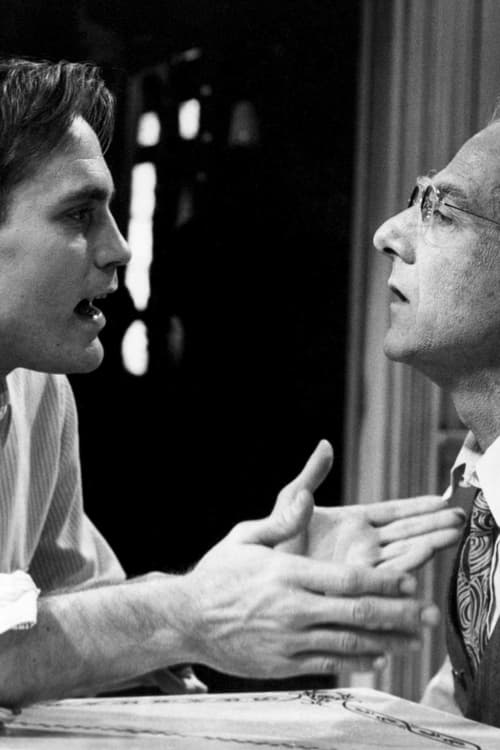
Private Conversations: On the Set of ‘Death of a Salesman’
1986
No user ratings available yet
Diversity score: 4.5 out of 10

1975
Director
William Friedkin
Runtime
51 minutes
Average Rating
No ratings yetSynopsis
American director William Friedkin interviewed Austrian director Fritz Lang on February 21st and 24th, 1975. Lang died August 2nd, 1976.
Overall Score
Fair
Category Breakdown
LGBTQ+ Representation
The documentary lacks explicit LGBTQ+ narratives or character-driven representation. While Lang's filmography often explores themes of alienation, this specific footage contains no active non-cisnormative portrayals.
Gender Representation
The film features a patriarchal intellectual exchange between two male directors. It does not feature female agency or subvert gender hierarchies, though it avoids reinforcing submissive femininity.
Racial & Ethnic Diversity
The dialogue focuses on a specific Western intellectual lineage and European cinematic tradition. Consequently, there is a lack of racial or ethnic intersectionality within the interview.
Religious & Cultural Diversity
The work excels in exploring subjective morality and deconstructing traditional storytelling. It prioritizes nuanced, situational truths over the promotion of singular, traditional Western institutional ideals.
Disability Representation
There is no evidence of subjects portraying visible or invisible disabilities within this documentary format.
Strengths
Areas for Improvement
AI Analysis
This documentary serves as a historical and intellectual archive rather than a vehicle for demographic representation. It functions as a recorded dialogue between two cinematic masters, focusing on technical and philosophical perspectives rather than character arcs. The film lacks the intersectional casting or identity-driven narratives found in contemporary cinema. Its structure is built upon the exchange of historical perspectives rather than traditional narrative representation. Ultimately, the work's value lies in its deconstruction of cinematic history and its engagement with complex, non-binary moral frameworks, even if it lacks broad social diversity.
1986
2018
1999
1983
1978
2008
2000
2003
2006
1991
1996
1968
No reviews yet. Be the first to share your thoughts on this movie!
Use the rating form above to leave a star rating and optional review.