
Cash
1933
No user ratings available yet
Representation score: 1.3 out of 10
Representation Score
Minimal
1940
ApprovedDirector
Leslie Goodwins, Charles E. Roberts
Runtime
65 minutes
Average Rating
No ratings yetNew Showbiz Analysis
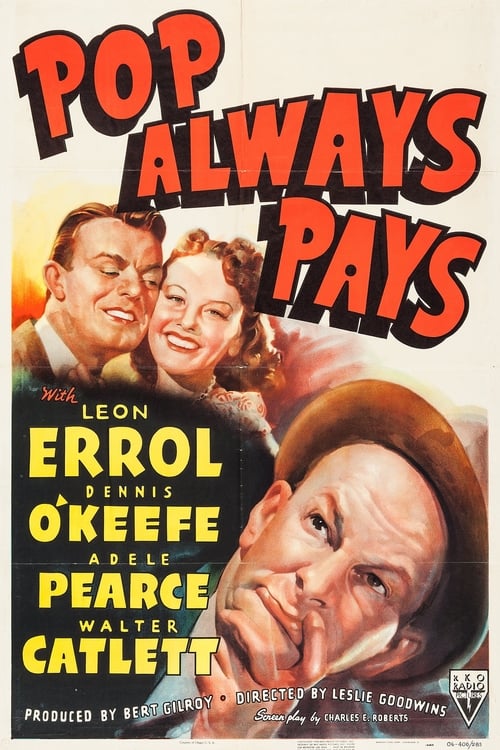
Pop Always Pays is a product of the 1940s studio system, functioning as a standard genre comedy that reinforces the social hierarchies of its era. The narrative structure is centered around traditional patriarchal roles and conventional romantic plots. The film lacks depth in reflecting multiple aspects of identity, focusing instead on a middle-class Western experience. It prioritizes fulfilling social contracts and family obligations, offering little disruption to the status quo of the time.
Category Breakdown
The film does not include any LGBTQ+ characters or stories. It focuses on a traditional wedding, following the conventions of 1940s studio comedies.
The story centers on a male figure's responsibility to provide for his daughter. Although women play key roles in the plot, the conflict revolves around male-driven themes of providing for the family.
The film reflects the homogeneous demographics typical of 1940s American cinema. It focuses on a conventional Western middle-class experience without showing diverse casting.
The narrative emphasizes traditional Western values related to family obligations and marriage. It upholds the stability of the nuclear family without challenging these social institutions.
There is no mention of characters with visible or invisible disabilities. The film does not address representation in this category.
Present on Screen
Limited or Absent
Official Synopsis
A businessman boasts he'll give his daughter a large amount of cash for her wedding, and then frantically tries to raise the money. This 1940 comedy stars Leon Errol, Marjorie Gateson, Dennis O'Keefe, Adele Pearce and Walter Catlett.
1933

1934
1940
1940
1934

1942
1947

1925
No reviews yet. Be the first to share your thoughts on this movie!
Use the rating form above to leave a star rating and optional review.