
Rebels of the Neon God
1994
No user ratings available yet
Representation score: 8.3 out of 10
Representation Score
Good
2001
UnratedDirector
Shunji Iwai
Runtime
146 minutes
Average Rating
No ratings yetNew Showbiz Analysis
Shunji Iwai’s film serves as a sophisticated critique of contemporary social structures, emphasizing the subjective experiences of individuals. It excels in its cultural deconstruction, questioning the stability of traditional institutions like the family and education. Though the film does not feature diverse demographics, it stands out by avoiding Western-centric norms and traditional masculine stereotypes. Instead, it highlights emotional vulnerability and psychological pain. However, the narrative remains confined by its homogeneous casting and its portrayal of psychological struggles through the lens of trauma. Additionally, it lacks explicit storytelling around LGBTQ+ themes.
Category Breakdown
The film examines intense emotional bonds between male characters without explicitly identifying these relationships as LGBTQ+. These connections remain ambiguous and do not use non-straight labels.
The story challenges traditional views of masculinity by highlighting the emotional vulnerability and psychological pain of its male characters. It portrays men as victims of societal pressures rather than strong leaders.
The film focuses on a homogeneous Japanese youth culture. Despite the lack of multi-ethnic casting, it offers a nuanced look at social and economic disparities within Japan.
The movie criticizes traditional institutions such as family and education, presenting them as ineffective or complicit. It emphasizes individual escape and a nihilistic worldview over religious or patriotic values.
The story delves into invisible disabilities, particularly severe mental health issues and social isolation. It avoids romanticizing psychological distress and focuses on the harsh realities of suffering.
Present on Screen
Limited or Absent
Official Synopsis
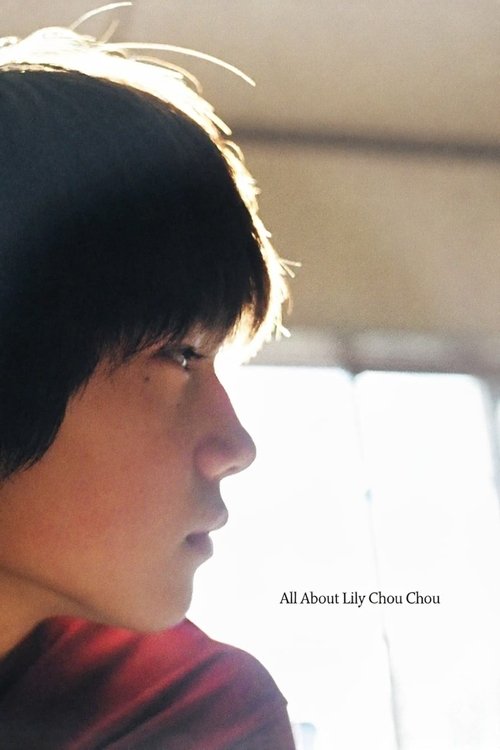
Charts the troubled teenage years of students Yūichi Hasumi and Shūsuke Hoshino, exploring the shifting and complex power dynamics of their relationship against the backdrop of Yūichi's love for the dreamy and abstract music of pop star Lily Chou-Chou.
1994

2004

2007

2006
1996

2010
1986
1994
No reviews yet. Be the first to share your thoughts on this movie!
Use the rating form above to leave a star rating and optional review.