
Un millón en la basura
1967
No user ratings available yet
Representation score: 3.1 out of 10
Representation Score
Fair
1957
Director
Edgar Neville, Guy Lefranc
Runtime
85 minutes
Average Rating
No ratings yetNew Showbiz Analysis
The film serves as a character study exploring social mobility and ethics through a series of interconnected stories. It utilizes irony to challenge the perceived stability of economic hierarchies rather than providing a simplistic moral resolution. While the production offers cultural breadth by connecting various Spanish cities with Paris, it remains rooted in the social constraints of the 1950s. The focus on traditional masculine archetypes and Eurocentric casting limits its multi-layered depth. Ultimately, the work succeeds as a critique of capitalist structures and human nature, even if it lacks modern identity-driven representation.
Category Breakdown
The film lacks explicit LGBTQ+ characters or narratives. It focuses on traditional social archetypes, reflecting the assumption that everyone is straight or cisgender.
The narrative centers on male-dominated professional roles like bullfighters and clerks. This reinforces conventional gender hierarchies and masculine social spheres.
The film offers geographic breadth by spanning Spanish locales and Paris. However, the cast likely adheres to the Eurocentric norms of the era.
The story uses irony to critique materialist values and social institutions. It avoids didactic moralizing, opting instead for a nuanced look at class and ethics.
There is no documented evidence of characters with disabilities playing central roles in the narrative arc.
Present on Screen
Limited or Absent
Official Synopsis
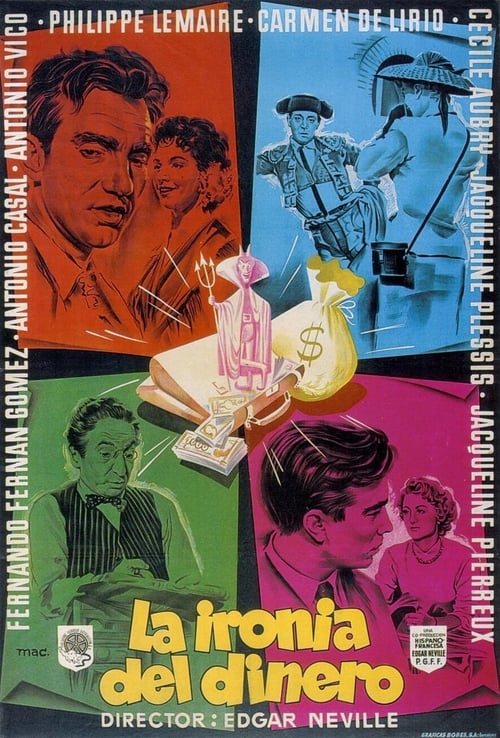
The finding of a wallet with a lot of money is the common theme of four stories, featuring a shoeshine from Seville, a clerk from Salamanca, a bullfighter from Cuenca and a newspapers seller from Paris.
1967

2000

1952

1948

1958

1956

1965

1976
No reviews yet. Be the first to share your thoughts on this movie!
Use the rating form above to leave a star rating and optional review.