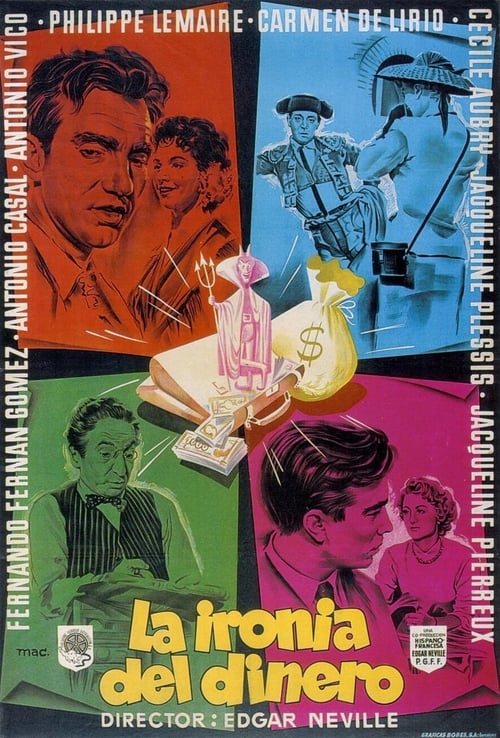
The Irony of Money
1957
No user ratings available yet
Representation score: 4.0 out of 10

Representation Score
Limited
1967
Director
José María Forqué
Runtime
90 minutes
Average Rating
No ratings yetNew Showbiz Analysis
This social comedy prioritizes class-based storytelling over identity-based representation. The narrative centers on the friction between poverty and sudden fortune, using a conventional moral framework to drive the protagonist's arc. The film operates within the established social hierarchies of 1960s Spain. It offers a nuanced look at socioeconomic struggle but lacks complexity in addressing diverse identities or challenging traditional structures. Ultimately, the work reflects a standard mid-century cinematic approach to social commentary, focusing on personal ethical dilemmas rather than demographic diversity.
Category Breakdown
The film focuses on the protagonist's socioeconomic journey and his domestic life, adhering to the conventional social mores of 1960s Spain. It does not explore non-straight or non-cisgender identities.
Gender dynamics follow traditional mid-century patterns. The female lead provides ethical guidance but does not challenge patriarchal hierarchies or exercise significant control over the story.
The cast is largely homogeneous, reflecting the localized social comedy genre of the era. The film does not engage with the complexities of racial diversity or include actors from different ethnic backgrounds.
The story examines the tension between individual desire and civic duty through a traditional moral lens. It critiques materialism but stays within established social frameworks.
There is no significant presence of characters with visible or invisible disabilities. The narrative remains focused on class mobility and the psychological effects of sudden wealth.
Present on Screen
Limited or Absent
Official Synopsis
In the vast army of human society, Pepe, a sweeper, occupies one of the last places: anonymous, gray, vague. Pepe is a member of that ghostly dawn brigade, to blow hose, clean the streets at dawn. One day Pepe finds a million in the trash. Financial need of the poor sweeper suggests keeping the money, but his wife advises him to do his civic duty and return the money ...
1957

1976
1952
1983
1956
1982

1984

1958
No reviews yet. Be the first to share your thoughts on this movie!
Use the rating form above to leave a star rating and optional review.