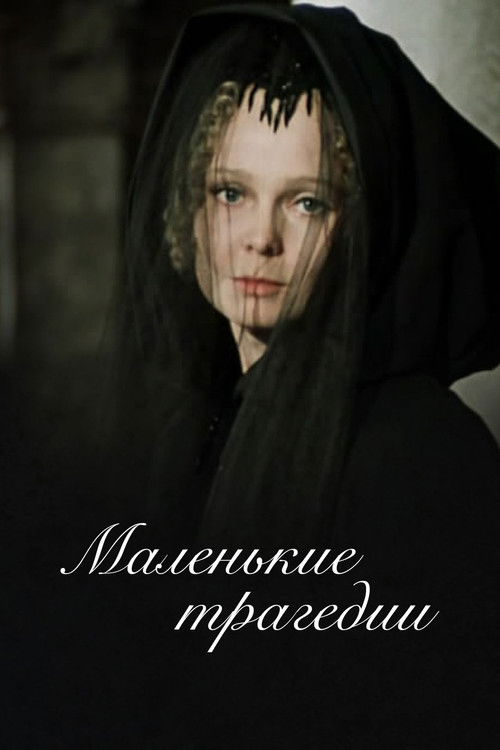
Little Tragedies
1980
No user ratings available yet
Representation score: 5.4 out of 10

Representation Score
Limited
1983
Not RatedDirector
Andrei Tarkovsky
Runtime
124 minutes
Average Rating
No ratings yetNew Showbiz Analysis
Tarkovsky’s *Nostalgia* is a metaphysical meditation that prioritizes spiritual experiences over social representation. It focuses on the internal landscape of a solitary man rather than the dynamics of a diverse ensemble. The film’s demographic composition is traditional, centered around a male-centric philosophical inquiry. While it avoids active misogyny, the female presence is secondary to the protagonist's spiritual struggle. Ultimately, the work rejects modern materialist values in favor of transcendentalism. It does not seek to challenge social hierarchies through identity but instead aims to transcend the material world entirely.
Category Breakdown
The film does not include any LGBTQ+ characters or stories. Relationships stay within a traditional framework focused on existential themes rather than diverse identities.
The story focuses on male existentialism and Andrei Gorchakov's spiritual journey. Female characters like Eugenia support the protagonist but do not have independent roles.
The film highlights cultural differences between the Russian protagonist and the Italian setting. However, the cast remains mostly uniform within a European context.
The film provides a sophisticated critique of Western materialism through a lens of mystical spirituality. It emphasizes historical and transcendental continuity over modern progress.
There are no prominent depictions of physical or neurodivergent disabilities that serve as central plot drivers or character studies.
Present on Screen
Limited or Absent
Official Synopsis
Russian poet Andrei Gorchakov journeys through Italy with his interpreter Eugenia to research the life of an 18th-century Russian composer who once lived abroad. Isolated and consumed by an unrelenting longing for his homeland, Andrei becomes drawn to Domenico, a radical mystic obsessed with spiritual redemption. Through austere imagery and extended temporal rhythms, Tarkovsky examines exile, memory, and the profound melancholy of being unable to belong fully to either place or language.
1980
1987

1951
1999
1957

1996

1995

1951
No reviews yet. Be the first to share your thoughts on this movie!
Use the rating form above to leave a star rating and optional review.