For the Beautiful Ladies!
1989
No user ratings available yet
Representation score: 4.7 out of 10
Representation Score
Limited
1975
Director
Zdeněk Podskalský
Runtime
75 minutes
Average Rating
No ratings yetNew Showbiz Analysis
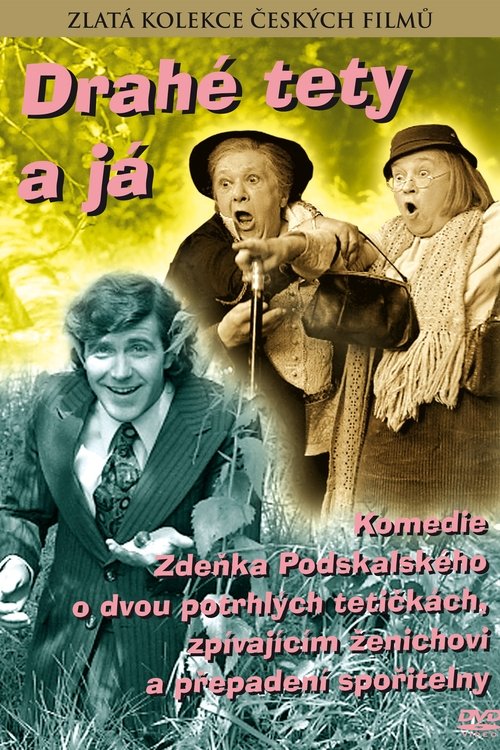
My Dear Aunt and Me is a character-driven comedy centered around two independent women in a small town. By placing these women at the forefront, the film avoids traditional patriarchal structures, even as it operates within a comedic framework. However, the film is limited by the demographic norms of 1975 Czechoslovakia. It lacks diversity, presenting a highly homogeneous social structure that reflects its specific regional and temporal context. Ultimately, the film succeeds as a social observation of mid-century European life but offers little in the way of broader representation or diverse identity exploration.
Category Breakdown
The film follows the traditional family structures of its time, focusing on sisters and a fiancé, with no indication of non-straight relationships.
Women play key roles in the film, particularly through the experiences of a spinster and a widow. Despite being described as foolish, they drive the main conflict.
The setting is highly homogeneous, reflecting the ethnic landscape of South Bohemia. There is no evidence of racial diversity or non-Slavic backgrounds.
The story provides a nuanced look at social institutions and small-town life, critiquing institutional stability through a bank robbery and local interpersonal dynamics.
No visible or invisible disabilities are shown. Physical conditions, such as being knocked unconscious, serve only as plot devices without deeper exploration.
Present on Screen
Limited or Absent
Official Synopsis
Two kind but foolish sisters live together in their villa in a small town in South Bohemia. Fany (Natasa Gollová) has never married and Andelka (Eva Svobodová) is a widow. In the morning, the two sisters go into town. They need to buy fuel oil, put money in the bank and give plums to the teller. In the meantime an smallish orange Skoda MB car parks at their house, with Hermínka (Iva Janzurová), the old ladies' niece, and her fiancé Michal (Jirí Hrzán) in it. Michal has forgotten to bring flowers and has to go into town to fetch them. At the bank, Fany wants to deposit money but the minute the teller opens the safe, a thief arrives. He knocks the teller and Fany unconscious and runs away with the money. When Fany comes to her senses again, she sees Michal and accuses him of being the thief.
1989

1964
1971
1976
1962
1983
1990
1963
No reviews yet. Be the first to share your thoughts on this movie!
Use the rating form above to leave a star rating and optional review.