
Crossing the Dust
2006
No user ratings available yet
Representation score: 5.7 out of 10
Representation Score
Good
2006
Director
Mohamed Al Daradji
Runtime
110 minutes
Average Rating
No ratings yetNew Showbiz Analysis
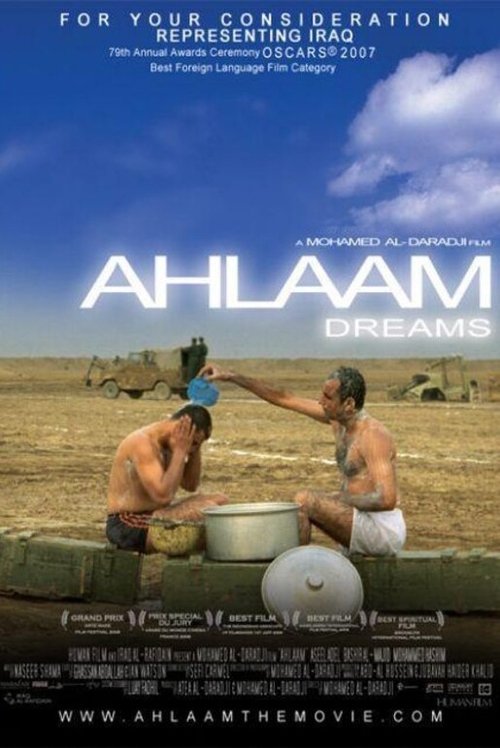
Dreams succeeds as a profound exploration of the psychological fragmentation of a society under duress. By centering Iraqi civilians during the 'Shock and Awe' campaign, it disrupts conventional war cinema clichés, shifting focus from geopolitics to visceral human consequences. The film's strength lies in its authentic, non-Western perspective. It reclaims ability to act for its characters, moving beyond mere victimhood to explore the internal complexities of life in Baghdad. While the film lacks explicit LGBTQ+ or gender-subversive elements, its nuanced treatment of psychological trauma and its post-colonial framework provide significant multi-layered depth.
Category Breakdown
The film does not include any explicit LGBTQ+ characters or stories. The narrative centers on the immediate survival and psychological trauma of the main characters within a traditional societal framework.
The film avoids reinforcing traditional masculine dominance by highlighting vulnerability. Characters are defined by their ability to endure trauma rather than by rigid gender roles of leadership.
The film excels by using an Iraqi cast to resist the Western perspective. It provides deep, character-driven roles to a population often sidelined in global media.
The film offers a post-colonial critique of Western military intervention. It emphasizes humanistic morality over religious directives, focusing on the chaos and moral ambiguity inherent in survival.
Set in a psychiatric asylum, the film addresses mental health seriously. It avoids using neurodivergence as a plot device, presenting psychological trauma as a systemic consequence of war.
Present on Screen
Limited or Absent
Official Synopsis
Scarred Baghdad 2003... confusion, uncertainty and death engulf the bombed ruins of a Psychiatric Asylum. Voyeuristically we move between the past and the present of three Iraqi lives entangled by the chaos of the American 'Shock and Awe' campaign...
2006
2013
2009

2009

2005
2000
2018
1993
No reviews yet. Be the first to share your thoughts on this movie!
Use the rating form above to leave a star rating and optional review.