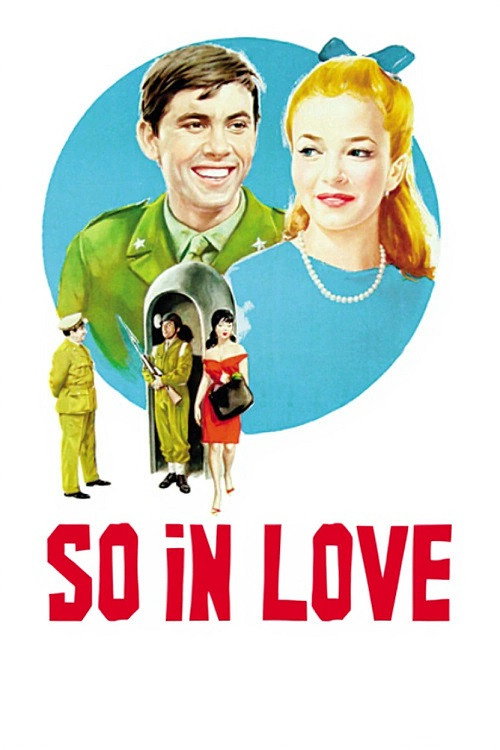
So In Love
1964
No user ratings available yet
Representation score: 1.4 out of 10
Representation Score
Limited
1965
Director
Ettore Maria Fizzarotti
Runtime
95 minutes
Average Rating
No ratings yetNew Showbiz Analysis
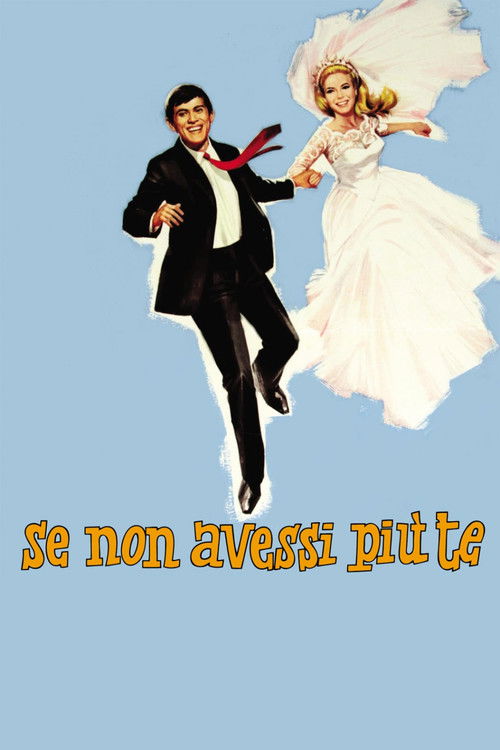
Don't Ever Leave Me is a conventional mid-century Italian musical comedy that adheres to the social and romantic norms of its era. The story prioritizes a traditional romantic arc centered on celebrity and marriage, offering little room for social subversion. The film functions as a commercial product of the 1960s, reinforcing established hierarchies rather than challenging them. It lacks the depth necessary to represent a broad spectrum of identities. Ultimately, the work serves as a period piece that reflects the cultural homogeneity of its time, focusing on domestic and emotional tensions within a standard framework.
Category Breakdown
The film centers on a heterosexual romance between a singer and his bride, reflecting the typical heterosexual relationships of 1960s musical comedies.
The story revolves around the male protagonist's career and celebrity status. The female lead's role is shaped by her reactions to his public image and media attention.
The film reflects the demographic uniformity of mid-1960s Italy, with a cast and setting that emphasize Italian cultural norms without incorporating actors from different ethnic backgrounds.
The narrative upholds traditional Western social structures, such as marriage and public reputation, without critiquing religious or family institutions.
The film does not include any characters with visible or invisible disabilities.
Present on Screen
Limited or Absent
Official Synopsis
A young singer secretly gets married since he does not want to let his fans down. After a while the gutter press make up a love story which seriously worries his young bride.
1964

1966
1969

1975
1960
1947
1968
1954
No reviews yet. Be the first to share your thoughts on this movie!
Use the rating form above to leave a star rating and optional review.