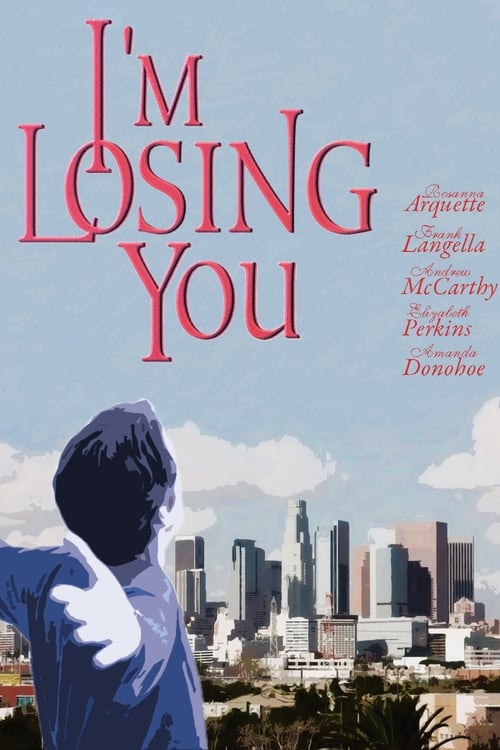
I'm Losing You
1998
No user ratings available yet
Diversity score: 5.0 out of 10

1993
Director
Stephen Whittaker
Runtime
94 minutes
Average Rating
No ratings yetSynopsis
Keith, Anna and their son Peter are a close, loving family living in a smart suburban street of a provincial city. Anna is a typical middle-class housewife, filling her day with good works, until one day, when she finds a note that leads to a shattering discovery - her husband has been having an affair. Anna's intense shock at finding out Keith's secret is compounded when she arranges to meet his lover. When Steve arrives at the meeting place, Anna is forced to accept the fact that Keith has been leading a double life for the length of their marriage. Steve stresses the risk of AIDS and urges Anna to have an AIDS test. To show her what it can be like to live with the disease, he introduces her to Jim, who needs 24-hour care and has developed a realistic attitude towards his own death. When Keith leaves home suddenly, Anna is forced to tell her son about the threat of HIV, but Peter turns violently against her and runs away.
Overall Score
Fair
Category Breakdown
LGBTQ+ Representation
The film integrates LGBTQ+ themes by centering the HIV/AIDS crisis within a middle-class setting. Through the character of Jim, the narrative humanizes the epidemic and provides a window into lived experiences without relying on derogatory tropes.
Gender Representation
Anna evolves from a traditional housewife archetype into a resilient figure navigating intense psychological and medical landscapes. While the film explores her agency, it maintains a traditional structure regarding the initial family unit.
Racial & Ethnic Diversity
The story focuses on a homogeneous, provincial, middle-class British demographic. There is no evidence of diverse casting or the intentional inclusion of non-Anglo-Saxon identities within the primary character arcs.
Religious & Cultural Diversity
The narrative deconstructs the 'perfect' Western family by exposing the fragility of suburban ideals. It explores moral complexity as characters face the breakdown of traditional social certainties and familial cohesion.
Disability Representation
Jim is depicted with a visible disability requiring constant care, treated with dignity rather than as a plot device. His realistic attitude toward death avoids common tropes of inspiration porn.
Strengths
Areas for Improvement
AI Analysis
Closing Numbers is a transitional drama that moves away from escapism to engage with the social realities of the 1990s. It uses the HIV/AIDS crisis to disrupt a conventional domestic setting, forcing characters to confront systemic health issues and moral ambiguity. The film excels in humanizing disability and the impact of the epidemic through characters like Jim. However, it remains limited by a lack of racial diversity, reflecting the homogeneous social environments typical of mid-90s British television. Ultimately, the work succeeds in challenging the sanctity of the nuclear family. It shifts the focus from passive domesticity to a more complex exploration of agency and survival in the face of betrayal.
1998

1989

2004

1992

1998

2004

2005

2015

2006

1993

1997

1998
No reviews yet. Be the first to share your thoughts on this movie!
Use the rating form above to leave a star rating and optional review.