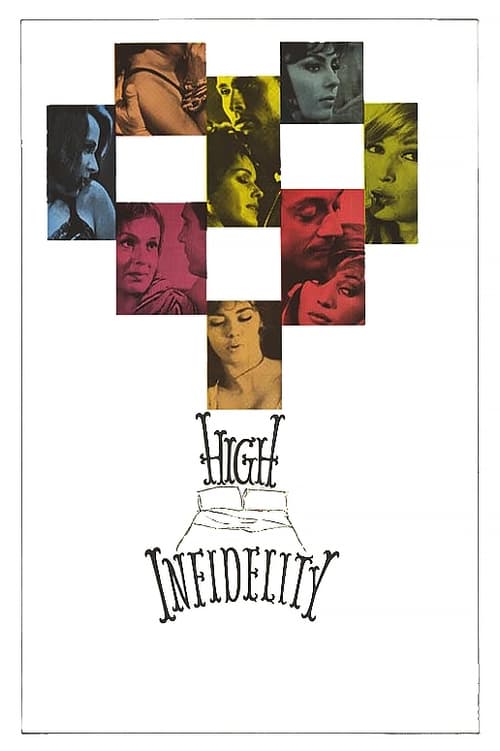
High Infidelity
1964
No user ratings available yet
Representation score: 4.1 out of 10

Representation Score
Limited
1966
Director
Pietro Germi
Runtime
115 minutes
Average Rating
No ratings yetNew Showbiz Analysis
Pietro Germi’s anthology employs social satire to critique mid-century Italian social norms. While the film doesn’t offer modern demographic diversity, it offers a sharp critique of the institutions that shape human behavior. By presenting infidelity and deception as natural reactions to repression, the film replaces rigid Christian morality with a nuanced exploration of human instincts. The film’s strength lies in its deconstruction of patriarchal and religious dominance rather than demographic variety.
Category Breakdown
The film adheres to a strict focus on straight relationships and traditional gender roles. It centers on conventional romantic and sexual relationships without exploring diverse sexual orientations or gender identities.
The film highlights the flaws in performative masculinity by showing men as hypocritical or manipulative. However, female characters often act primarily as catalysts for male conflicts, lacking independent roles in driving the story.
The setting portrays a highly localized and homogeneous community. It focuses on internal social hierarchies within a single cultural group, without showcasing racial or ethnic diversity.
The satire effectively challenges the hypocrisy found in the Catholic Church and among community elders. It questions the sanctity of traditional family structures and religious authority.
There are no prominent depictions of physical or neurodivergent disabilities that play central roles in the narrative.
Present on Screen
Limited or Absent
Official Synopsis
An anthology presents three storylines, all set in the Italian town of Treviso: A husband pretends to be impotent as a cover for having an affair; a bank clerk abandons his wife for his mistress, but the rest of the town's husbands become jealous and unite to conspire against them; and local men all seduce a promiscuous young woman, but when her father eventually reveals that she is underage, they all face prosecution for statutory rape.
1964
1973
1966
1962
1970
1969
1977
1964
No reviews yet. Be the first to share your thoughts on this movie!
Use the rating form above to leave a star rating and optional review.