
Night Shapes
1999
No user ratings available yet
Diversity score: 5.8 out of 10
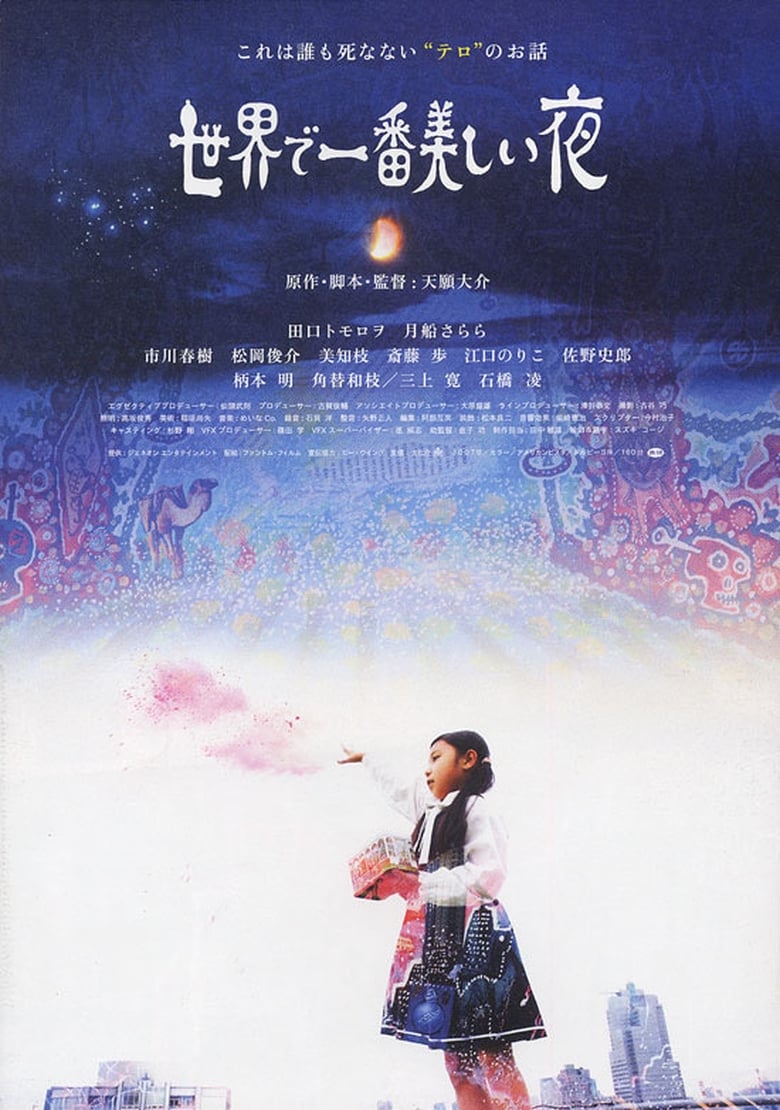
2008
Director
Daisuke Tengan
Runtime
160 minutes
Average Rating
No ratings yetSynopsis
Betrayed and disgraced, big-city reporter Kazuya Mizuno is banished to a desk at Kaname's boring little town newspaper. But Kaname isn't as boring as it seems on the surface. Not with characters around like Shimeko, a girl genius with a childlike lack of propriety, and her ace fisherman/folk-singer dad. Or the overbearing and unpleasant local Shinto priest, a former Christian cultist. Or Endo, Kazuya's new colleague, a bitter drunk after his son's suicide. Or Kin, a former terrorist, now a hermit on his boat engaging in secret "research." Or perhaps most importantly Teruko, the hypnotically beautiful bar owner, the focus of all manner of innuendo and intrigue. Something mysterious, even mystical, is going on Kaname, and hapless Kazuya is about to be thrown into the middle of it.
Overall Score
Fair
Category Breakdown
LGBTQ+ Representation
The film features characters living on the fringes of social norms, such as Kin, a hermit. While the narrative hints at subtext through intrigue and innuendo, it lacks explicit confirmation of queer identities.
Gender Representation
Female characters like Shimeko and Teruko hold significant agency and mystery. The story subverts traditional tropes by depicting male leads in states of disgrace, bitterness, or professional banishment.
Racial & Ethnic Diversity
Set in a localized Japanese town, the film follows traditional demographic expectations. It explores identity through cultural and spiritual lenses rather than through multi-ethnic casting.
Religious & Cultural Diversity
The narrative offers a critique of organized religion, portraying a Shinto priest with a cultist background as unpleasant. It prioritizes social friction and subjective morality over religious absolutes.
Disability Representation
The story touches on mental health and neurodivergent traits through Endo’s grief-driven alcoholism and Shimeko’s unconventional behavior. It remains unclear if these traits are handled with full autonomy.
Strengths
Areas for Improvement
AI Analysis
The film excels at deconstructing social hierarchies by centering flawed, marginalized, or disgraced individuals. It avoids traditional heroic tropes, instead focusing on characters who exist outside of conventional civic respectability. While the narrative provides a sophisticated critique of religious and social institutions, it remains limited by a homogeneous setting and a lack of explicit representation regarding LGBTQ+ identities. The focus is more on social dysfunction and moral relativism than on diverse demographic inclusion.
1999
2023
2013

2005
2000
1958

2015

1994
2018
2019
2014

2008
No reviews yet. Be the first to share your thoughts on this movie!
Use the rating form above to leave a star rating and optional review.