
His Master's Voice
2001
No user ratings available yet
Representation score: 3.5 out of 10
Representation Score
Fair
2014
Director
Luis Marías
Runtime
100 minutes
Average Rating
No ratings yetNew Showbiz Analysis
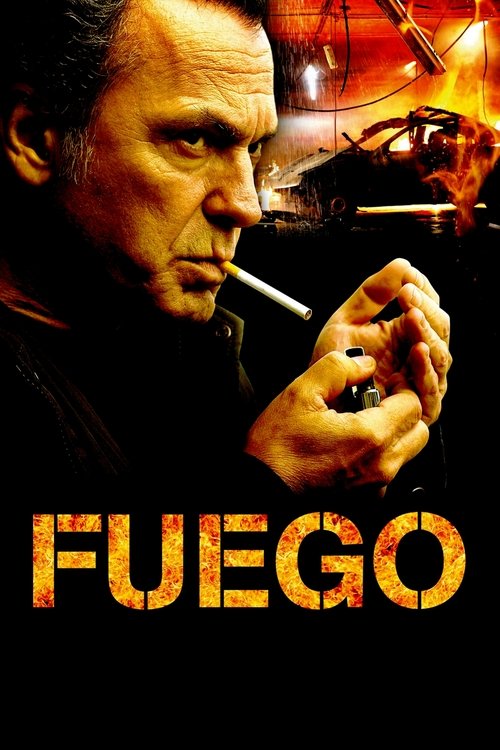
Fire is a social realist drama that excels in exploring the intricacies of immigrant integration and the consequences of political violence. By featuring a Polish immigrant within a Spanish household, the film transcends purely domestic or Anglo-centric storytelling. However, the film adheres to traditional dramatic structures. The narrative leans heavily on conventional masculine archetypes, with the male protagonist driving the story and protecting the family unit. Overall, while the film offers a nuanced perspective on social instability and ethnic diversity, it falls short in representing LGBTQ+ identities and disabilities.
Category Breakdown
The film does not include any explicit LGBTQ+ characters or narratives. The story centers on familial bonds and the immigrant experience, without addressing non-straight identities.
Although the daughter is a key figure, the narrative ability to act primarily belongs to the male protagonist. The story adheres to traditional masculine roles of protector and law enforcement officer.
The inclusion of Mariusz, a Polish immigrant, adds meaningful ethnic diversity. His presence integrates a non-Spanish European identity into the Spanish household, disrupting local homogeneity.
The film examines the psychological impact of political violence in the Basque Country. It highlights the human cost of systemic conflict rather than focusing on traditional institutional stability.
There is no indication of the depiction of physical, neurodivergent, or mental health disabilities within the narrative.
Present on Screen
Limited or Absent
Official Synopsis
Bilbao, Basque Country, 2001: a ruthless terrorist attack shatters the family of police officer Carlos Martínez. Barcelona, 2013: Carlos leaves Mariusz, a Polish immigrant, in charge of his daughter and, offering vague excuses, returns to the Basque Country and rents a house in Lekeitio, a small village by the sea.
2001
2008

2023

2025

2008

2019

2004

2021
No reviews yet. Be the first to share your thoughts on this movie!
Use the rating form above to leave a star rating and optional review.