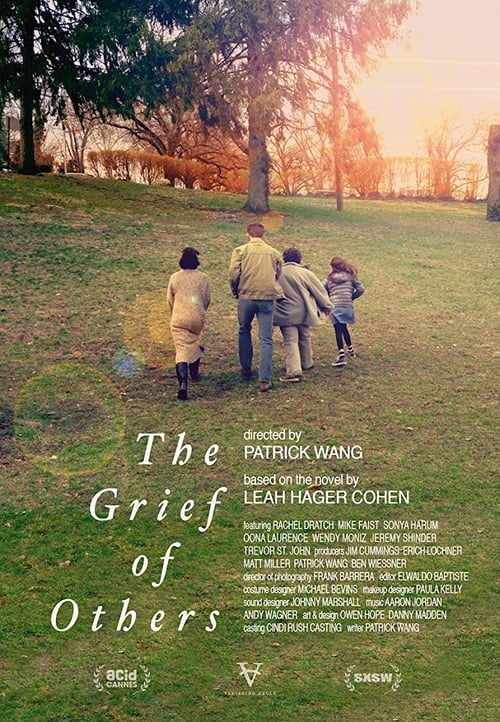
The Grief of Others
2015
No user ratings available yet
Diversity score: 7.7 out of 10

2011
Director
Patrick Wang
Runtime
169 minutes
Average Rating
No ratings yetSynopsis
In the town of Martin, Tennessee, Chip Hines, a precocious six year old, has only known life with his two dads, Cody and Joey. And a good life it is. When Cody dies suddenly in a car accident, Joey and Chip struggle to find their footing again. Just as they begin to, Cody's will reveals that he named his sister as Chip's guardian. The years of Joey's acceptance into the family unravel as Chip is taken away from him. In his now solitary home life, Joey searches for a solution. The law is not on his side, but friends are. Armed with their comfort and inspired by memories of Cody, Joey finds a path to peace with the family and closer to his son.
Overall Score
Good
Category Breakdown
LGBTQ+ Representation
The film centers a same-sex partnership as its foundational element rather than a subplot. It normalizes queer domesticity by focusing on emotional intimacy and the systemic legal failures facing non-cisnormative families.
Gender Representation
The narrative subverts traditional hierarchies by emphasizing vulnerability and shared caretaking. It avoids masculine dominance tropes, focusing instead on the nuances of grief and the struggle for agency.
Racial & Ethnic Diversity
The cast remains relatively homogeneous, centering a predominantly white experience in Tennessee. This lack of intersectional diversity limits the exploration of how race intersects with queer identity.
Religious & Cultural Diversity
The story offers a nuanced critique of Western institutions and biological kinship. It prioritizes the truth of emotional bonds over rigid, institutionalized definitions of family and property.
Disability Representation
There is no central depiction of physical or neurodivergent disability. While the film explores the psychological weight of grief, these are treated as universal human experiences.
Strengths
Areas for Improvement
AI Analysis
In the Family is a sophisticated study of identity and systemic friction. It succeeds by placing a queer domestic unit at the heart of its conflict, using the characters' lived reality to critique legal frameworks that fail to recognize non-traditional kinship. The film's strength lies in its refusal to make identity the source of conflict, instead focusing on the institutional obstacles faced by the protagonists. This elevates the narrative from a simple character study to a broader critique of social orders. However, the film's impact is narrowed by its lack of racial complexity. By focusing on a homogeneous community, it misses the opportunity to examine the intersection of race and queer life in the American South.
2015

2011

2019

1992

2017

2005

2012

1995

2014

1998

2014

2000
No reviews yet. Be the first to share your thoughts on this movie!
Use the rating form above to leave a star rating and optional review.