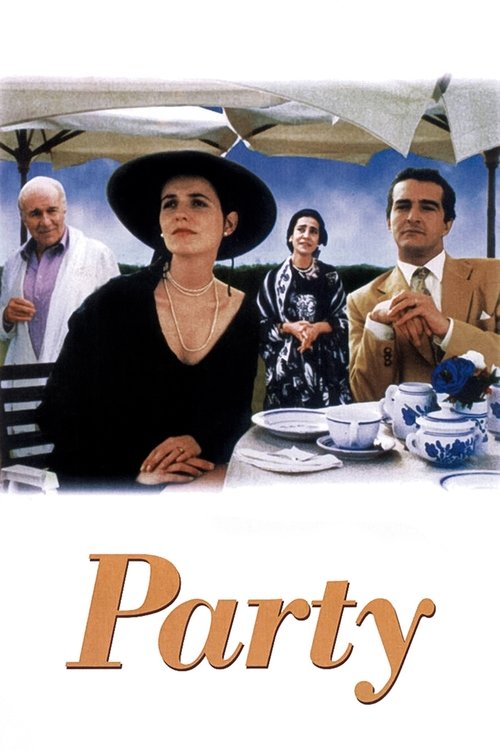
Party
1989
No user ratings available yet
Representation score: 3.5 out of 10
Representation Score
Fair
1996
Director
Manoel de Oliveira
Runtime
92 minutes
Average Rating
No ratings yetNew Showbiz Analysis
Manoel de Oliveira’s *Party* is a sophisticated chamber drama that prioritizes psychological complexity over conventional plot. It succeeds in challenging traditional gender hierarchies, moving away from patriarchal leadership to highlight the ability to act of its female characters. However, the film remains limited by a homogeneous cast that reflects a specific socioeconomic class in the Azores. This lack of racial and ethnic diversity keeps the diversity score lower than its intellectual achievements. Ultimately, the work functions as a nuanced study of human ability to act. It rejects rigid social and moral structures in favor of a more fluid, postmodern exploration of interpersonal power.
Category Breakdown
The film explores subtle emotional undercurrents and shifting intimacies. Although it doesn't explicitly depict non-traditional gender identities, it hints at a departure from strict assumptions about gender roles through subjective desire.
Leonor emerges as an enigmatic force rather than a passive domestic figure. The narrative disrupts traditional hierarchies by emphasizing her intellectual power and ability to act over patriarchal stability.
The cast appears homogeneous, reflecting the specific Azorean setting and socioeconomic class. There is no evidence of significant racial blending or intentional ethnic the way different parts of someone's identity overlap.
The film embraces moral relativism and subjective truth. It deconstructs class stability by framing motivations through shifting loyalties rather than rigid ethical frameworks.
The narrative provides no specific evidence regarding the portrayal of physical or neurodivergent disabilities. No characters are identified with such traits.
Present on Screen
Limited or Absent
Official Synopsis
The battle of the sexes? The forces of despair and seduction? On S. Miguel in the Azores, Rogério, a young man with old money, and his enigmatic wife Leonor host a garden party at their villa. The intriguing guests are an older unmarried couple, the philosophical and observant Irene, and Michel, a roué. While Rogério and Irene talk, Michel and Leonor go down to the sea. The conversations upset Rogério and capture Leonor's imagination. Five years later, the four dine at the villa. Michel and Leonor again leave the other two. Intentions and undercurrents are subtle. One of the four proves strong, one weak, and two must choose. Wind and rain bring down the curtain on both acts.
1989

1939

2012
1952
2020
1969

1989
1987
No reviews yet. Be the first to share your thoughts on this movie!
Use the rating form above to leave a star rating and optional review.