Drumroll
1993
No user ratings available yet
Representation score: 4.3 out of 10
Representation Score
Fair
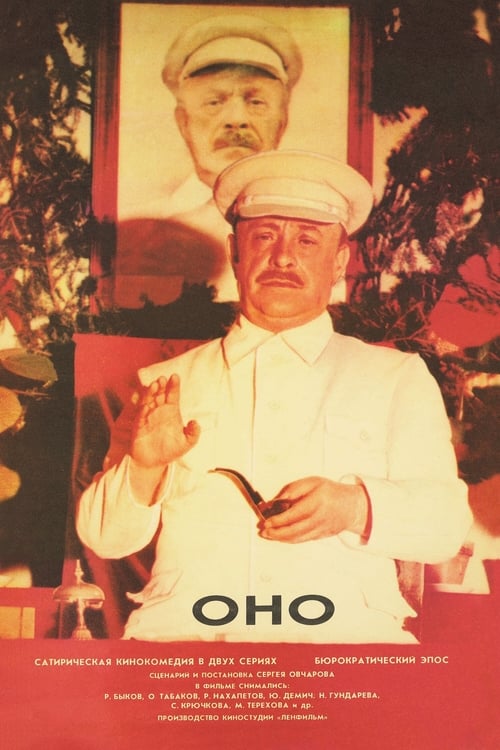
1989
Director
Sergey Ovcharov
Runtime
124 minutes
Average Rating
No ratings yetNew Showbiz Analysis
Ono is a work of profound political and systemic critique rather than a study in demographic representation. It uses grotesque imagery to deconstruct state authority and repetitive institutional tyranny. The film's strength lies in its aggressive subversion of political structures and historical revisionism. It prioritizes systemic commentary over a diverse range of individual character identities. Ultimately, the work serves as a satirical examination of the Russian state, favoring systemic commentary over a broad range of individual character identities.
Category Breakdown
The film does not include explicit LGBTQ+ characters or stories. Instead, it focuses on the bureaucratic system and political allegories, emphasizing systemic cycles over personal identity.
The story centers around male-dominated political structures, depicting leaders as grotesque or incompetent but still highlighting the male-centric political authority.
The film focuses on Russian history within a specific ethno-national framework. It lacks a multi-ethnic cast, concentrating instead on the internal political development of the state.
The film critiques centralized power and institutional morality using satire. It disrupts traditional historical narratives and challenges established frameworks of governance.
There are no characters with physical or neurodivergent disabilities in the film. The narrative focuses on macro-level political and historical themes rather than individual physical representation.
Present on Screen
Limited or Absent
Official Synopsis
The bureaucratic epos on the dialogues and plots of Mikhail Saltykov-Shchedrin "The History of a Town". In a metaphorical and grotesque form, the film conveys the history of Russia from the calling of the Varangians until the end of the 20th century. The film traces the change of the “chiefs” of the county town of Glupov, which differ in varying degrees of tyranny and the corresponding total number of “killed” city residents. The heads of the city easily guess the former heads of the Russian state and the USSR.
1993
2011
1966
2020
2022
2017
1991
2004
No reviews yet. Be the first to share your thoughts on this movie!
Use the rating form above to leave a star rating and optional review.