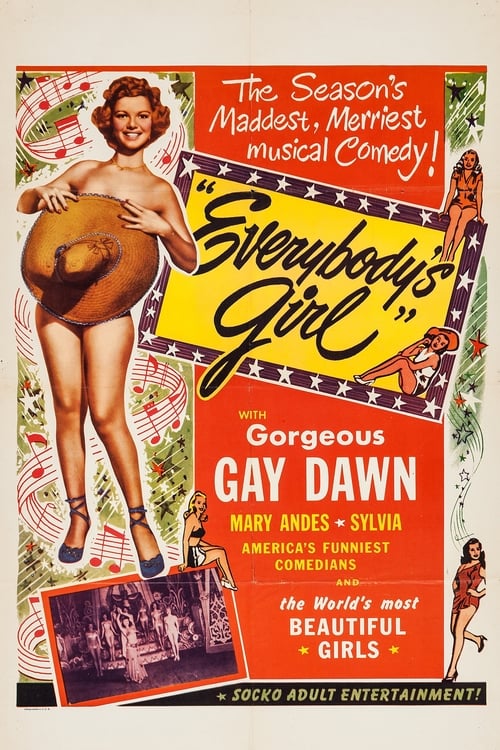
Everybody's Girl
1950
No user ratings available yet
Representation score: 2.5 out of 10
Representation Score
Minimal
1953
Director
Lillian Hunt
Runtime
63 minutes
Average Rating
No ratings yetNew Showbiz Analysis
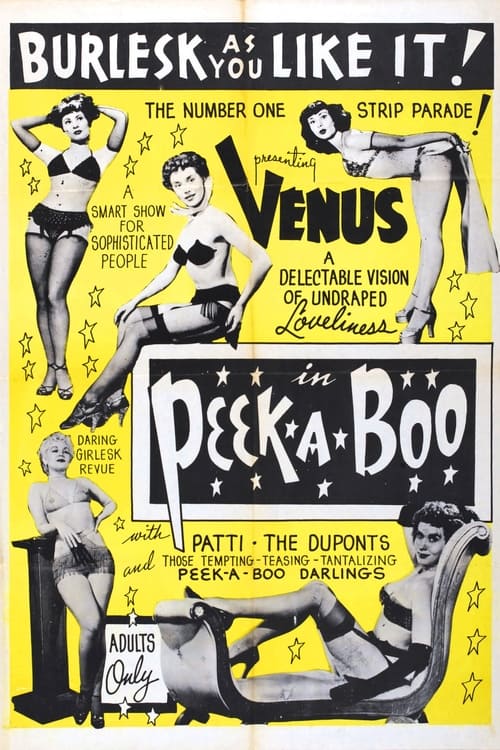
Peek-a-Boo (1953) serves as a specialized archival recording of a burlesque show rather than a narrative film with intentional social themes. It functions primarily as a cultural artifact of its era. While the subject matter inherently challenges the social decorum of the 1950s, the work lacks the character depth and systemic critique required for a higher diversity rating. The performers lack the ability to act needed to disrupt traditional hierarchies. Ultimately, the film provides a window into niche entertainment but fails to offer meaningful representation across most diversity categories.
Category Breakdown
The film does not include any explicit LGBTQ+ characters or non-cisgender identities. Although burlesque historically provided spaces for queer subcultures, there are no specific queer narratives in this film.
Female performers are the central focus of the visual narrative. However, the production often reinforces traditional femininity and the male gaze rather than challenging gender hierarchies.
There is no information regarding the racial or ethnic composition of the cast. The production lacks any evidence of a diverse or multi-ethnic ensemble.
The film captures a form of entertainment that existed on the periphery of mid-century social respectability. It functions as a performance record rather than a critique of Western institutions.
The documentation contains no mention of performers or characters with visible or invisible disabilities.
Present on Screen
Limited or Absent
Official Synopsis
A filmed record of a burlesque show featuring strippers and comedians.
1950
1955
1954
1952
1954
1954
1949

1953
No reviews yet. Be the first to share your thoughts on this movie!
Use the rating form above to leave a star rating and optional review.