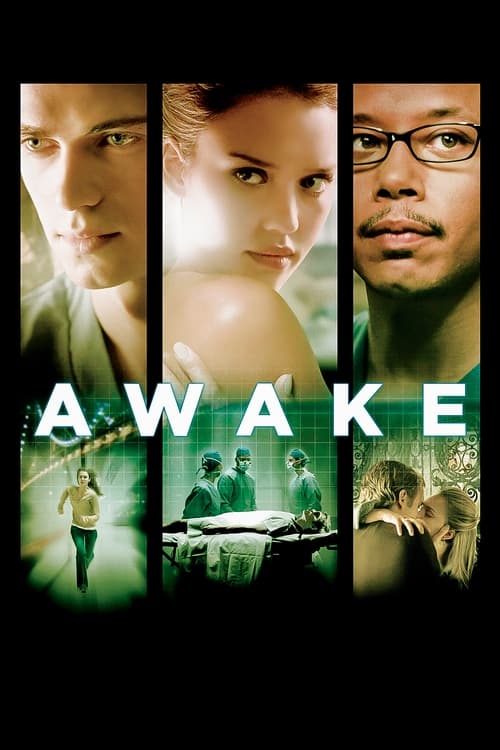
Awake
2007
No user ratings available yet
Representation score: 3.8 out of 10

Representation Score
Limited
2007
Director
Penelope Buitenhuis
Average Rating
No ratings yetNew Showbiz Analysis
Wide Awake is a genre-driven thriller that finds its most significant progressive value in its portrayal of disability. By centering a protagonist with narcolepsy, the film integrates a neurological condition into the core mechanics of the plot and character's ability to drive the story. While the film succeeds in providing a strong female lead who avoids passive clichés, it lacks broader multi-layered depth. The narrative remains within the conventional bounds of mid-2000s television thrillers, focusing on individual heroism against corporate malfeasance. Ultimately, the film fails to engage with LGBTQ+ identities, racial diversity, or complex cultural deconstruction, making its impact largely one-dimensional.
Category Breakdown
The film does not include any LGBTQ+ characters or narratives addressing non-assuming gender matches what was assigned at birth identities. The story focuses entirely on the central mystery and the protagonist's medical condition.
Cassie serves as a strong female protagonist who actively pursues a conspiracy. This challenges the typical damsel in distress cliché, though the diversity of the supporting cast is unconfirmed.
There is no evidence of a diverse or non-Anglo-Saxon majority cast. The narrative does not indicate any race-bent casting or ethnic representation.
The film explores themes of institutional corruption and unregulated science. However, it follows standard thriller clichés rather than offering a deep critique of specific cultural or religious frameworks.
Narcolepsy is central to the plot and the protagonist's ability to drive the story. The film uses this neurological condition as a narrative driver rather than a source of mockery.
Present on Screen
Limited or Absent
Official Synopsis
Cassie has no problem falling asleep -- it's staying awake that's the hard part, because she's narcoleptic. Fortunately for Cassie, she works in a lab that has just created a serum to treat this disruptive condition. However, when subjects in the trial for this new drug start dropping dead, she uncovers a conspiracy that sends her on a dangerous pursuit of the truth. Will she fall asleep on the job? Let's hope not -- she's got a lot of bullets (and sleep-deprived hallucinations) to dodge along her road to justice.
2007

1978
2019
1997

2012

2011

2001
2021
No reviews yet. Be the first to share your thoughts on this movie!
Use the rating form above to leave a star rating and optional review.