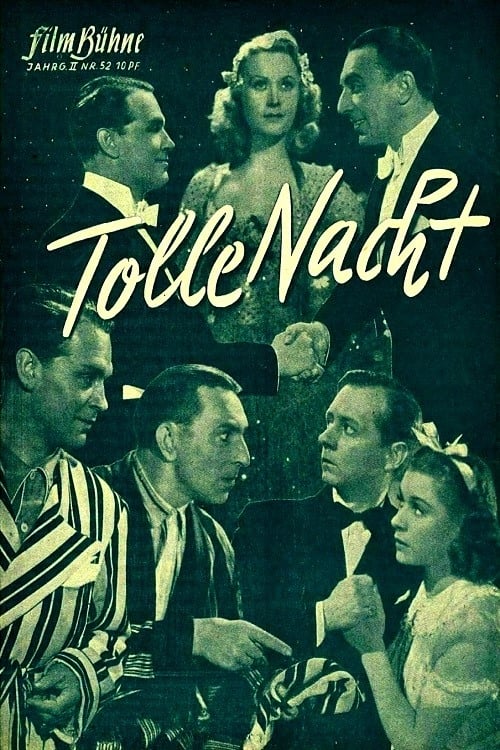
Tolle Nacht
1943
No user ratings available yet
Diversity score: 1.5 out of 10
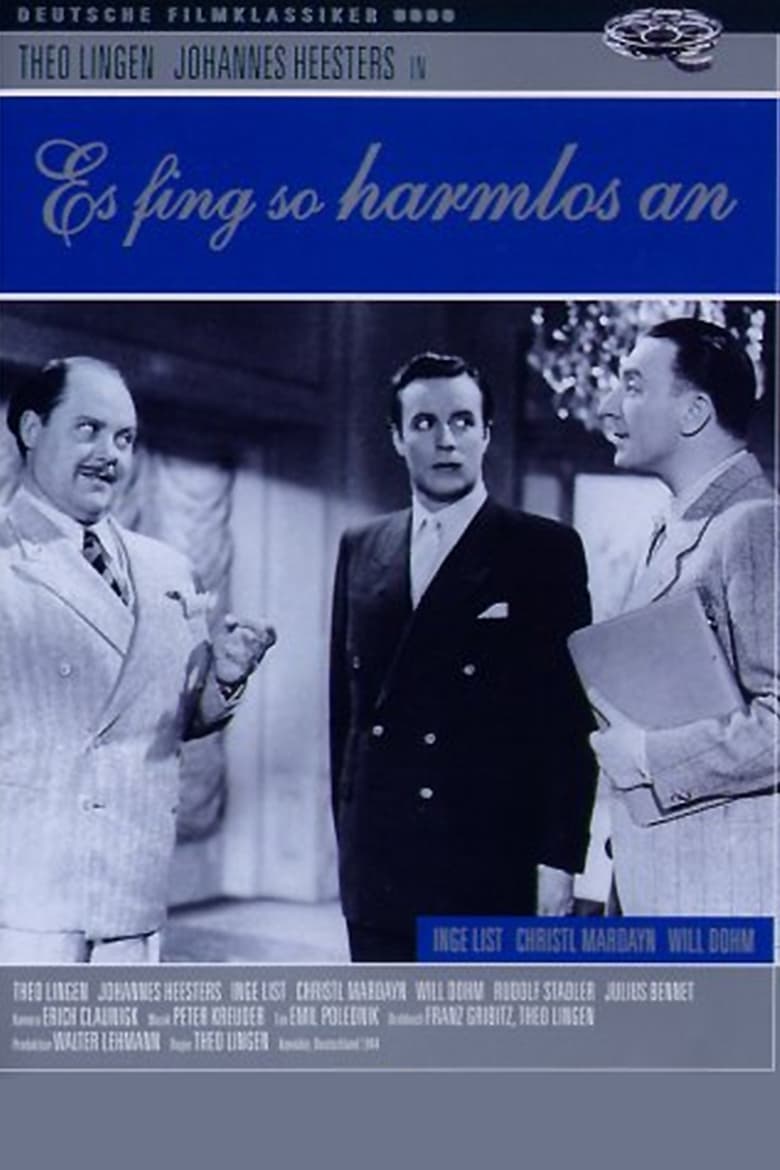
1944
Director
Theo Lingen
Runtime
90 minutes
Average Rating
No ratings yetSynopsis
Clemens and Bobi, two legation secretaries, are sent on a delicate mission by their minister: it concerns a red portfolio with secret papers, which the minister stuck under a bed mattress and forgot about when he met someone on a rendezvous. And to make things more difficult, the horny minister can't remember which room he left it in. After several incidents in different hotel rooms, neither secretary has found a thing. There's not a trace of the portfolio; but Clemens is more interested in Annette, the young lady in one of the hotel beds, than in the portfolio. He forgets his mission and can think only of her. Boni, in the meantime, has found his way into a room, where Olivia is staying and sees a red, leather folder there. But the woman throws him out in short order.
Overall Score
Minimal
Category Breakdown
LGBTQ+ Representation
The narrative centers on traditional heterosexual dynamics and romantic pursuits. There is no evidence of non-cisnormative identities or stories that challenge heteronormativity.
Gender Representation
Male characters drive the plot through professional and romantic motivations. Female characters function primarily as objects of desire or obstacles rather than independent agents.
Racial & Ethnic Diversity
The film reflects the homogeneous demographic standards of 1944 Germany. There is no indication of non-white casting or diverse ethnic perspectives.
Religious & Cultural Diversity
The story utilizes classic farcical tropes involving diplomatic decorum. It operates within established institutional frameworks rather than critiquing them.
Disability Representation
The film contains no mention of characters with visible or invisible disabilities.
Strengths
Areas for Improvement
AI Analysis
This 1944 comedy is a product of its historical era, relying heavily on conventional social structures and traditional comedic archetypes. The plot is driven by situational farce and heteronormative romantic interests, offering no disruption to the mid-1940s social or gender hierarchies. The narrative architecture prioritizes the comedic pursuits of male protagonists, while female characters remain secondary to the central mission. This lack of agency for women and absence of diverse identities results in a very low diversity profile.
1943
1941
1940
1941
1945
1943
1942

1928
1953
1914
1952
1943
No reviews yet. Be the first to share your thoughts on this movie!
Use the rating form above to leave a star rating and optional review.