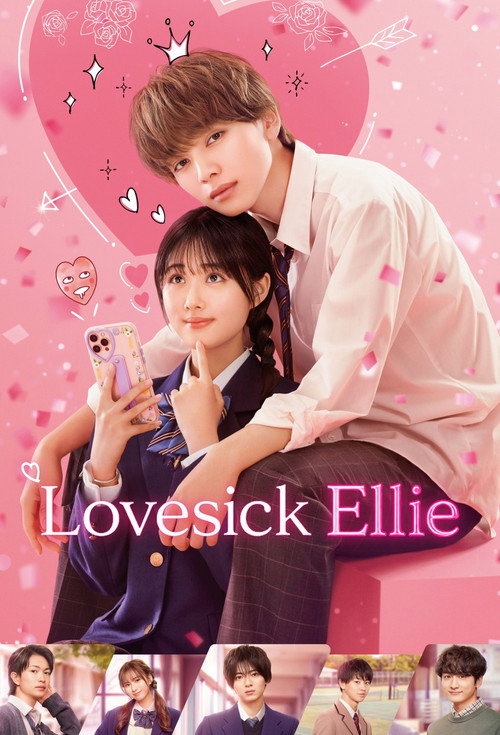
Lovesick Ellie
2024
No user ratings available yet
Representation score: 4.2 out of 10

Representation Score
Limited
2014
Director
Yuichi Fukuda
Runtime
93 minutes
Average Rating
No ratings yetNew Showbiz Analysis
Rose Color's Buko operates as a standard genre piece, prioritizing comedic timing and situational irony over social commentary. The narrative is built around a traditional romantic pursuit, focusing on the protagonist's personal evolution within a conventional framework. The film lacks the complexity required for high characters who reflect more than one aspect of diversity. It adheres to a culturally specific baseline, focusing on domestic Japanese life and digital social interactions rather than exploring diverse identities or systemic power dynamics. Ultimately, the film functions as a character-driven comedy that stays within the bounds of traditional social structures, offering little in the way of representation for underrepresented groups.
Category Breakdown
The story follows a conventional heterosexual romantic trajectory. Sachiko's pursuit of a male counterpart met through social media lacks any evidence of non-traditional gender identities or critiques of traditional romance.
The film centers on a female protagonist's internal struggle with romantic expectations. While she plays a significant role in driving the story, the narrative remains rooted in standard romantic comedy clichés without challenging gender hierarchies.
The production appears to be a localized Japanese comedy focusing on domestic social dynamics. The setting and cast suggest a homogeneous cultural environment without multicultural casting or diverse character arcs.
Themes focus on individual happiness and digital culture rather than systemic critique. The narrative explores personal romantic fulfillment instead of challenging religious, capitalist, or Western institutional structures.
There is no mention of visible or invisible disabilities within the character arcs or plot progression.
Present on Screen
Limited or Absent
Official Synopsis
Sachiko is an university student. Her nickname is Buko, because she has been negative about everything since she was young. Sachiko believes someday she will meet a man like in a romance manga. Her university life is boring and she spends her time reading romance manga in her room. One day, on Twitter, she meets a man who uses the user ID of Sparrow. He likes reading manga and looks like Johnny Depp. Sachiko makes a date to meet the man. She tries to change herself, but it's not so easy due to various unexpected incidents.
2024

2014

2014

2018

2017

2014

2013

2020
No reviews yet. Be the first to share your thoughts on this movie!
Use the rating form above to leave a star rating and optional review.