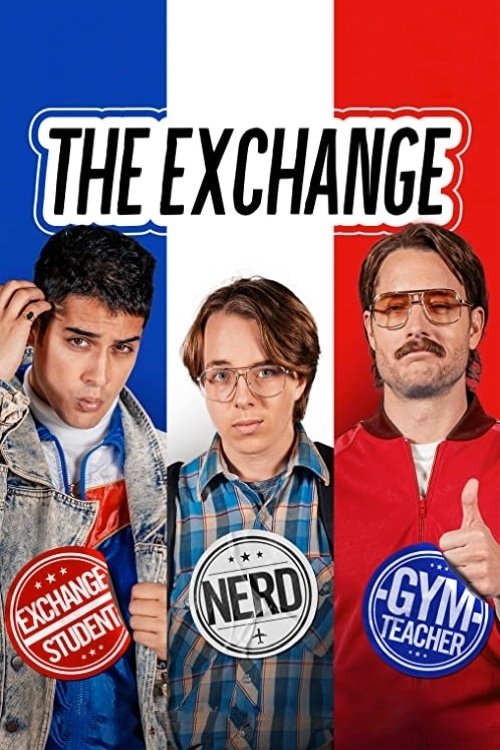
The Exchange
2021
No user ratings available yet
Diversity score: 4.1 out of 10

2014
MDirector
Takuro Oikawa
Runtime
114 minutes
Average Rating
No ratings yetSynopsis
Second year high school student Kodaka Hasegawa has transferred to his new school about a month ago, but he still hasn't made any friends. Kodaka Hasegawa was born from a Japanese father and a British mother. Because of his appearance, people think Kodaka Hasegawa is a troubled kid. One day, Kodaka Hasegawa sees classmate Yozora Mikazuki pleasantly talking to herself. Kodaka Hasegawa talks with her about how to make friends. To make friends, Yozora Mikazuki decides to form the Neighbor's Club and forces Kodaka to enroll in the club.
Overall Score
Limited
Category Breakdown
LGBTQ+ Representation
The film adheres to traditional social structures without exploring queer or non-heteronormative dynamics. There is no discernible presence of non-cisnormative identities within the high school framework.
Gender Representation
A female-dominated ensemble drives the social mechanics of the Neighbor's Club. However, the narrative remains anchored to the male protagonist and relies heavily on established genre tropes.
Racial & Ethnic Diversity
The protagonist is of mixed Japanese and British heritage, though this is used primarily to explain his social reputation. The rest of the cast remains largely homogeneous.
Religious & Cultural Diversity
The story presents a localized depiction of contemporary Japanese youth culture and niche subcultures. It lacks broader institutional critiques or engagement with diverse moral frameworks.
Disability Representation
Social awkwardness is framed as personality quirks or subcultural identifiers rather than disability. The film lacks a nuanced portrayal of neurodivergent experiences or agency.
Strengths
Areas for Improvement
AI Analysis
The film functions as a character-driven social comedy that prioritizes subcultural identity over systemic diversity. While it offers a specific look at 'otaku' culture, it stays within the safe boundaries of traditional genre expectations. Representation is largely superficial. The protagonist's mixed heritage is a plot device for social friction rather than a deep exploration of identity, and the female characters often fall into predictable archetypes. Ultimately, the narrative lacks the intentionality needed to challenge social hierarchies. It focuses on the micro-dynamics of friendship within a homogeneous social milieu, offering little engagement with broader intersectional or queer perspectives.
2021

2017
2019

2014
2015

2016

2007

2000

2017

2015

2014

2016
No reviews yet. Be the first to share your thoughts on this movie!
Use the rating form above to leave a star rating and optional review.