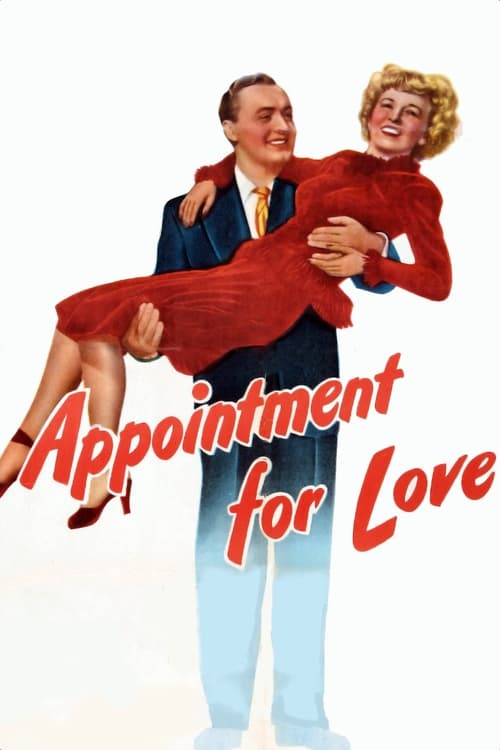
Appointment for Love
1941
No user ratings available yet
Representation score: 1.6 out of 10
Representation Score
Minimal
1941
ApprovedDirector
W.S. Van Dyke
Runtime
97 minutes
Average Rating
No ratings yetNew Showbiz Analysis
The film explores gendered power struggles within a traditionalist setting. While it offers a nuanced look at women's ability to drive the story through characters who challenge male intellectual ideals, it lacks characters who reflect more than one aspect of diversity. The dynamics are contained within a broader framework of racial homogeneity, reinforcing conventional Western social norms without critiquing the institutions it depicts.
Category Breakdown
The film focuses exclusively on heterosexual relationships and male attention, adhering to the assumption that everyone is straight or cisgender. There is no representation of LGBTQ+ identities or queer subtext.
Women play a significant role in driving the story, particularly through emotional and tactical conflicts. Julie is portrayed as a proactive and scheming force who challenges male intellectual dominance.
Casting is overwhelmingly homogeneous, reflecting the era's tendency to center white, upper-middle-class experiences. There is no evidence of significant non-Anglo-Saxon characters.
The narrative reinforces traditional Western social structures and the sanctity of nuclear marriage. It celebrates material success within high-society publishing and fashion environments.
The film does not feature characters with visible or invisible disabilities. Disability is not utilized as a narrative device.
Present on Screen
Limited or Absent
Official Synopsis
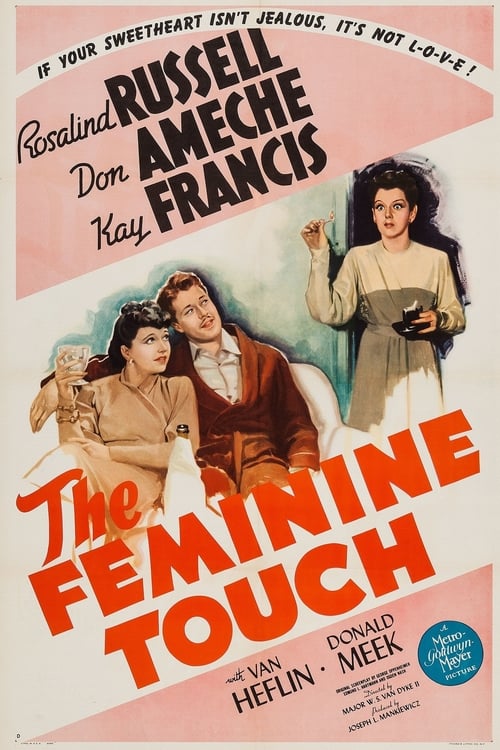
A college professor who believes there's no place for jealousy in modern marriage, John Hathaway (Don Ameche) moves with his wife, Julie (Rosalind Russell), to New York where he plans to publish a book on the subject. Meeting with publisher Elliott Morgan (Van Heflin), who falls head over heels for Julie, John is assigned to his assistant Nellie (Kay Francis), who only has eyes for her boss. Working closely with Nellie, who Julie thinks is after her husband, John continues his high-minded ways while his angry spouse schemes to make him so jealous he'll knock Elliott's block clean off.
1941
1948
1935

1934
1942
1940

1957
1949
No reviews yet. Be the first to share your thoughts on this movie!
Use the rating form above to leave a star rating and optional review.