
Hell's Angels
1930
No user ratings available yet
Representation score: 0.2 out of 10
Representation Score
Minimal
1935
ApprovedDirector
Christy Cabanne
Runtime
82 minutes
Average Rating
No ratings yetNew Showbiz Analysis
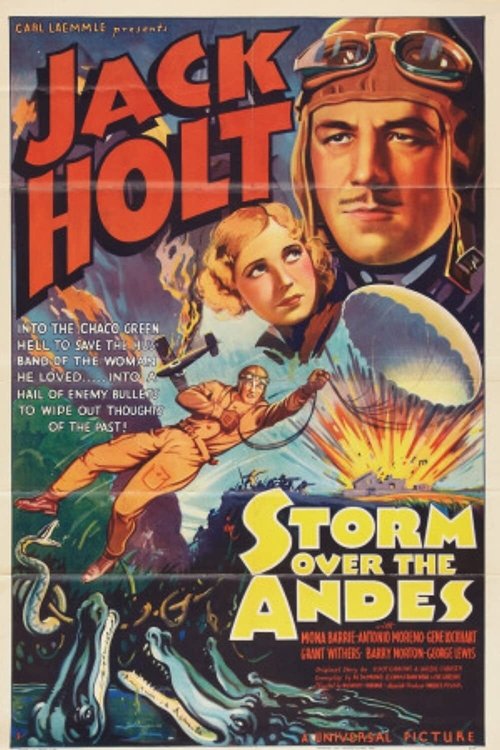
Storm Over the Andes is a quintessential product of 1930s adventure cinema, prioritizing genre clichés over social complexity. The narrative relies on traditional hierarchies where masculinity is tied to leadership and survival. The film utilizes its South American setting as an exotic backdrop for Western protagonists rather than exploring indigenous ability to act. This approach limits the depth of the local populations, who function more as geopolitical context than fully realized characters. Ultimately, the work lacks multi-layered representation. It reinforces the era's conventional gender and racial roles, placing it firmly within the traditionalist spectrum of early sound-era filmmaking.
Category Breakdown
The film adheres to the assumption that everyone is straight or cisgender, with no evidence of non-traditional gender identities or same-sex relationships.
Female characters primarily serve as romantic interests or figures needing rescue. Power dynamics remain focused on masculine leadership and physical strength.
The cast is predominantly white, using the Andean setting as an exotic backdrop. Local populations serve as atmospheric elements rather than characters with significant roles.
The narrative operates within a standard Western adventure framework. It embraces traditional heroism clichés without critiquing colonialist or imperialist power dynamics.
There is no documented evidence of characters with visible or invisible disabilities being used as central plot devices.
Present on Screen
Limited or Absent
Official Synopsis
A war between Bolivia and Paraguay is the setting for the stories of flyers involved with both sides in the conflict.
1930

1966
1944

1939
1943
1949

1934

1927
No reviews yet. Be the first to share your thoughts on this movie!
Use the rating form above to leave a star rating and optional review.