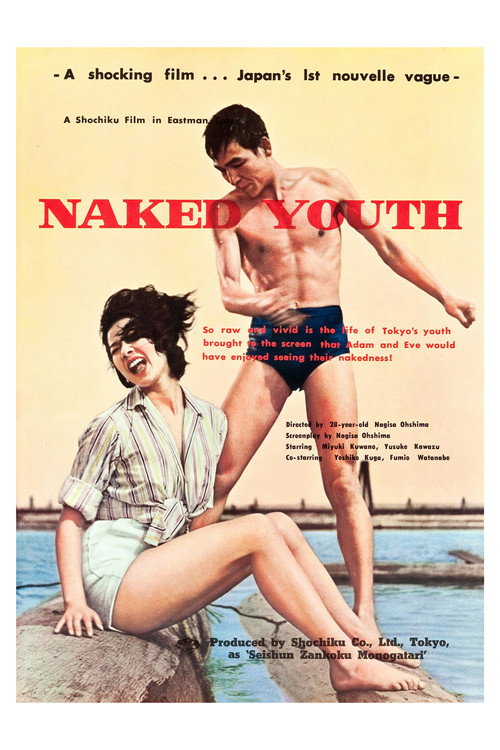
Cruel Story of Youth
1960
No user ratings available yet
Representation score: 6.3 out of 10
Representation Score
Fair
1960
Director
Gwon Yeong-sun
Runtime
124 minutes
Average Rating
No ratings yetNew Showbiz Analysis
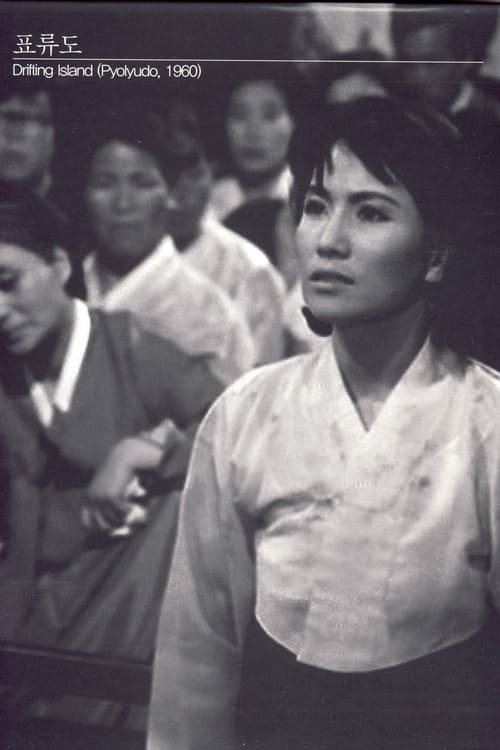
A Drifting Story offers a nuanced look at women's ability to drive the story within the constraints of 1960s Korean melodrama. By centering on a woman who manages her own business and supports her family, the film moves beyond the era's typical patriarchal structures. However, the film remains bound by the social norms of its time. It lacks representation for LGBTQ+ identities and disability, and the cast is culturally homogeneous, reflecting the era's localized cinematic landscape. Ultimately, the film's strength lies in its critique of social institutions. It uses the protagonist's struggle against societal scorn to challenge the era's strict moralistic and hierarchical standards.
Category Breakdown
The film does not include any explicit LGBTQ+ characters or non-straight relationships. The plot revolves around a traditional romantic triangle involving a single mother and two male suitors.
Hyun Hee plays a central role in driving the plot, running a business and serving as the primary provider. This role challenges traditional gender norms by emphasizing women's active participation over passive domestic roles.
The production features a cast that is culturally homogeneous, typical of 1960s South Korean cinema. It lacks the multi-ethnic casting or intentional racial blending found in more modern global works.
The narrative critiques rigid Confucian social hierarchies by focusing on a single mother and her illegitimate daughter. It highlights the systemic pressures and moralistic judgments of the community.
There is no mention of characters with physical or neurodivergent disabilities. No representation is present in the narrative.
Present on Screen
Limited or Absent
Official Synopsis
This melodrama follows the trials and tribulations of a single mother who dares to love. Hyun Hee (Mun Jeong Suk) makes a living running a coffee house. She has to support her illegitimate daughter and mother, and bear the scorn of those who look down on her. Hyun Hee falls in love with a married writer (Kim Jin Kyu), while another customer (Choi Mu Ryong) holds a torch for her. The romantic triangles that unfold lead to tragic consequences.
1960
1960
1958
1965
1955
1961
1969
1970
No reviews yet. Be the first to share your thoughts on this movie!
Use the rating form above to leave a star rating and optional review.