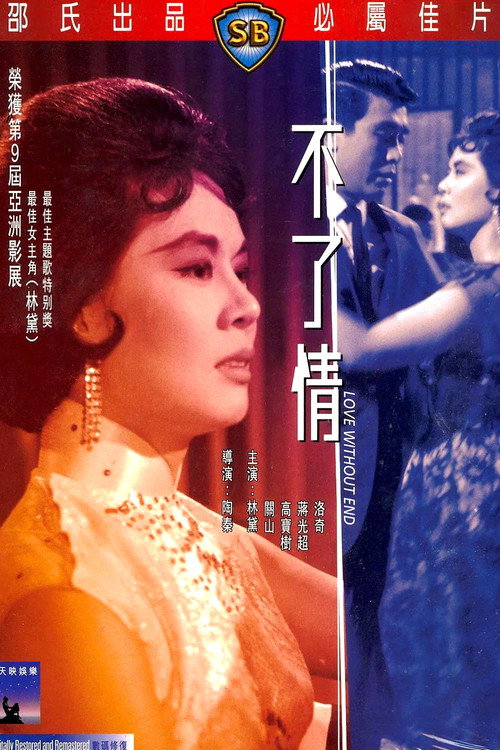
Love Without End
1961
No user ratings available yet
Representation score: 3.7 out of 10
Representation Score
Limited
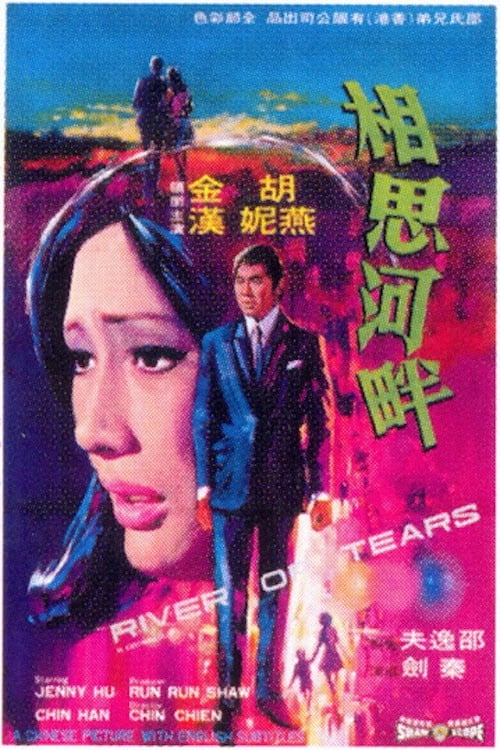
1969
Director
Chun Kim
Runtime
74 minutes
Average Rating
No ratings yetNew Showbiz Analysis
River of Tears is a period-specific melodrama centered on female resilience. The film follows Fang Biyu as she navigates a criminal underworld and faces the heavy burden of social blame after a tragic accident. While the film provides a non-Western perspective on romance and tragedy, it remains rooted in the genre conventions of 1960s Hong Kong cinema. The narrative explores the tension between individual ability to act and the cyclical nature of economic entrapment. Ultimately, the film serves as a study of a woman attempting to reclaim her identity and motherhood despite being caught in a cycle of social and criminal pressures.
Category Breakdown
The film features a romantic triangle involving a female protagonist and two brothers. There are no LGBTQ+ identities or queer subtexts present.
Fang Biyu seeks autonomy from criminal influence but her strength is often limited by male-driven tragedies and restrictive social structures.
This Hong Kong production offers a non-Western perspective. It delves into culturally specific themes such as familial duty and social honor.
The story portrays the struggle against organized crime and social reputation. It highlights the profound personal suffering caused by systemic pressures.
There are no visible or invisible disabilities portrayed as central to the character arcs in this film.
Present on Screen
Limited or Absent
Official Synopsis
Mysterious songstress Fang Biyu is loved by two brothers, Qiwei and Qijun. After freeing herself from the clutches of gangsters, she gives her heart to Qiwei. Tragedy comes knocking on the door when one of the gangsters comes out of prison, and Qiwei dies in a car accident. Blamed for her husband's death, Biyu is forced to go back to singing to make a living, but hopes to reunite with her son and return to the family one day.
1961

1939
1960
1977
1970
1986
2008

1997
No reviews yet. Be the first to share your thoughts on this movie!
Use the rating form above to leave a star rating and optional review.