
Sweetheart
1977
No user ratings available yet
Diversity score: 3.2 out of 10
1980
Director
Pasquale Festa Campanile
Runtime
108 minutes
Average Rating
No ratings yetSynopsis
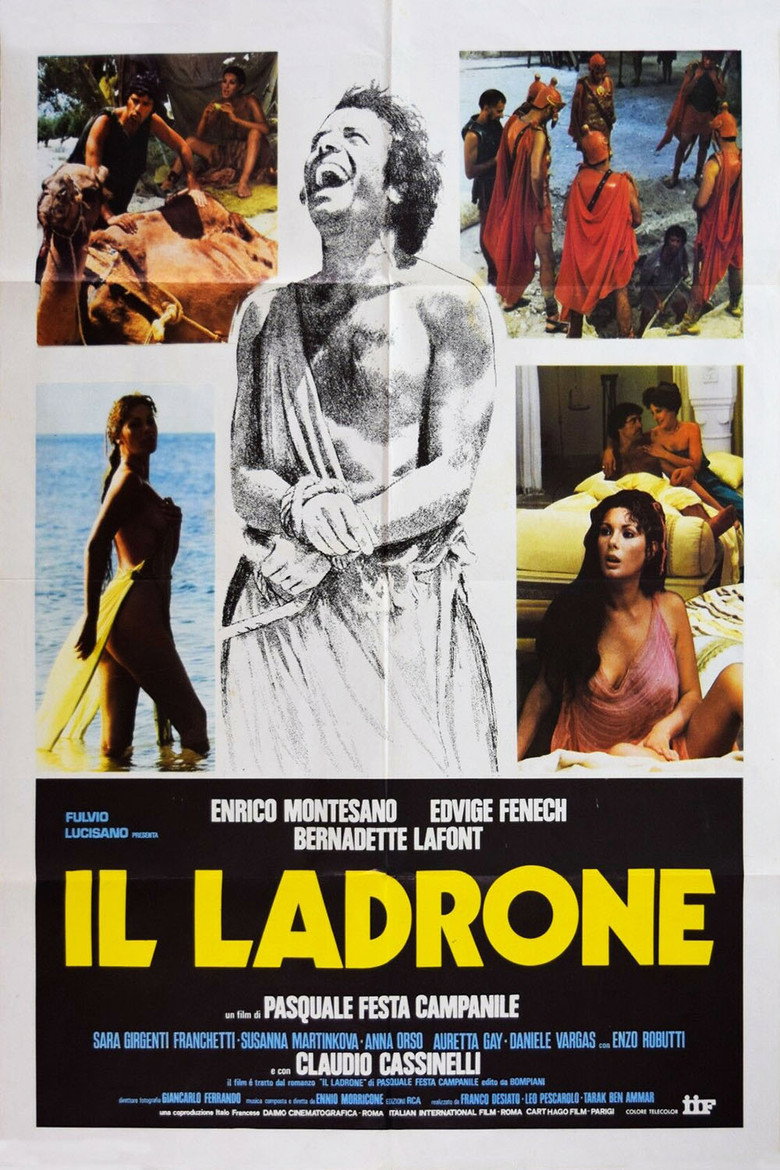
Caleb, "son of nobody" (Enrico Montesano) lives in Galilee in Jesus' day and struggles as a thief and con-man, pretending to be a magician. When he witnesses Jesus turning water into wine, he thinks he's found a competitor. So Caleb goes on, convinced that Jesus is a fake just as he is, always trying to figure out his tricks. In the meantime, he gets involved with a prostitute (played by Edwige Fenech), but also with the wife of a Roman patrician (played by the equally alluring Bernadette Lafont), he steals a few goats and cons a few people, he befriends a lovable dog and gets in trouble with some Roman soldiers.
Overall Score
Fair
Category Breakdown
LGBTQ+ Representation
The film focuses on heteronormative romantic entanglements. There is no evidence of non-cisnormative gender identities or narratives designed to critique heteronormativity.
Gender Representation
Female characters occupy roles that challenge submissive archetypes by operating on society's fringes. However, the narrative remains centered on the male protagonist's perspective.
Racial & Ethnic Diversity
The period setting implies a diverse historical landscape, but the cast follows standard 1980s European casting conventions. There is no evidence of intentional non-white protagonist representation.
Religious & Cultural Diversity
The film deconstructs religious authority by framing miracles as mere tricks. It prioritizes a skeptical, secular worldview over traditional religious dogma.
Disability Representation
There is no discernible focus on physical or neurodivergent disabilities within the narrative.
Strengths
Areas for Improvement
AI Analysis
The film is a subversive comedy that uses a cynical, anti-authoritarian protagonist to challenge religious sanctity. It succeeds in deconstructing institutional authority by treating the miraculous through a lens of skepticism and moral relativism. However, the film lacks intersectional depth. It relies on traditional heteronormative structures and follows the standard casting conventions of its era, offering little in the way of racial or LGBTQ+ diversity. Ultimately, the work's strength lies in its secular, morally ambiguous exploration of human deception rather than its social representation.
1977

1982
1980
1973

2020
1960

1967
1980

1960

1980

1970

1943
No reviews yet. Be the first to share your thoughts on this movie!
Use the rating form above to leave a star rating and optional review.