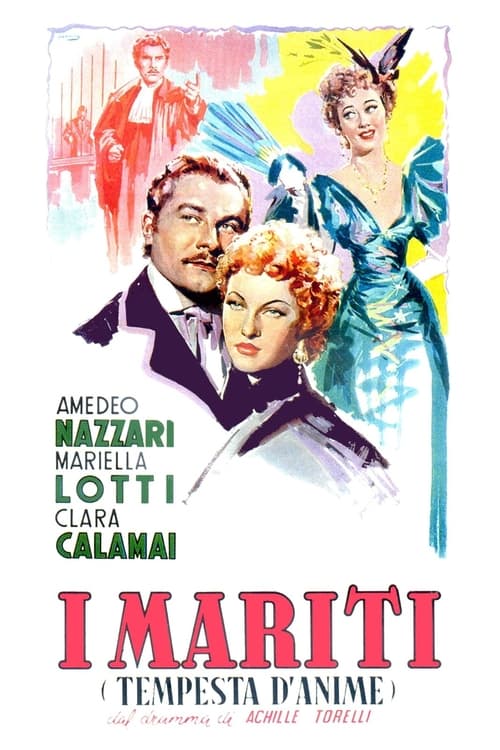
I mariti
1941
No user ratings available yet
Representation score: 0.5 out of 10
Representation Score
Limited
1937
Director
Augusto Genina
Runtime
83 minutes
Average Rating
No ratings yetNew Showbiz Analysis
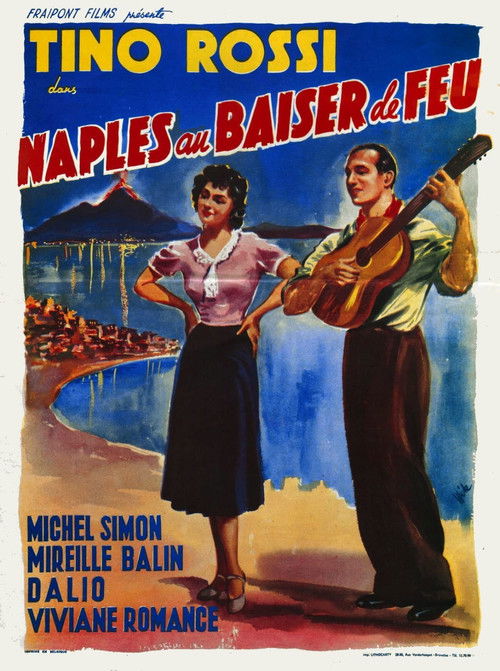
Naples Under the Kiss of Fire operates as a conventional romantic comedy of the 1930s. The story relies on established clichés of courtship, betrayal, and the consequences of impulse, centering on a standard male-driven narrative arc. The film reflects the social constraints and narrative norms of its era. It lacks the complexity or disruption of traditional hierarchies necessary to move beyond a standard period piece. While the Neapolitan setting provides a specific localized ethnic identity, the characters and their conflicts remain rooted in the homogeneous social frameworks of 1937 European cinema.
Category Breakdown
The film centers around heterosexual relationships and does not include any queer subtext or non-assuming gender matches what was assigned at birth identities within the main love triangle.
Female characters such as Assunta and Teresa mainly serve as objects of desire or catalysts for male decisions. While Lolita demonstrates some independence as an adventurer, the plot remains driven by male protagonists.
The setting in Naples provides localized ethnic specificity through a Neapolitan cast. However, the representation reflects the homogeneous demographic of the time rather than intentional diversity.
The narrative explores traditional social structures, focusing on the tension between personal impulses and relational obligations. It does not seek to deconstruct the family unit or institutional norms.
There is no mention of characters with visible or invisible disabilities in the narrative.
Present on Screen
Limited or Absent
Official Synopsis
Mario Esposito, who sings in a Neapolitan restaurant, is in love with Assunta, the niece of Teresa, the owner of the place. He shares his apartment with Michel, his best friend. This one has fallen under the spell of Lolita, a gorgeous adventuress he met at the cathedral where he officiates as the organist. But things go awry as, while Michel intercedes with Aunt Teresa for Assunta's hand in his favor, Mario in turn falls in love with Lolita. On the very day of his wedding with Assunta, Mario runs away with Lolita, thus betraying both his love and his friend. But it does not take long before the young singer realizes the big mistake he has made.
1941

1952
1956
1955

1972
1932
1934

1934
No reviews yet. Be the first to share your thoughts on this movie!
Use the rating form above to leave a star rating and optional review.