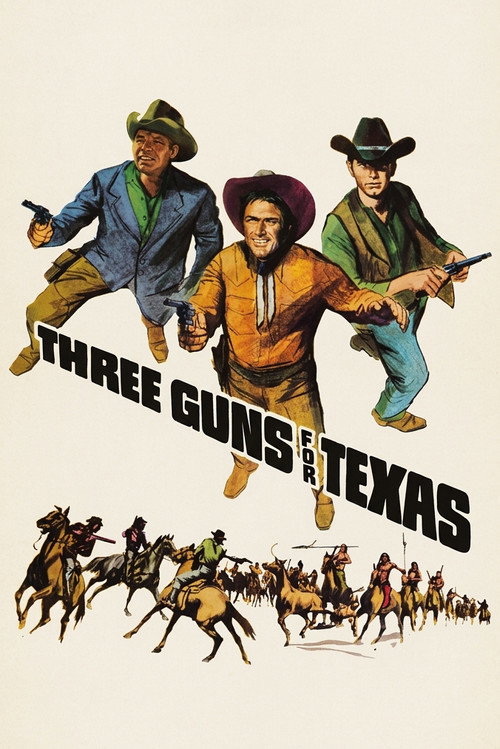
Three Guns for Texas
1968
No user ratings available yet
Representation score: 0.6 out of 10

Representation Score
Limited
1973
PGDirector
Giuseppe Rosati
Runtime
83 minutes
Average Rating
No ratings yetNew Showbiz Analysis
The film opens on a sun-bleached desert, a landscape that immediately establishes the harsh, indifferent world in which its characters must survive. *Those Dirty Dogs!* is a late-era Spaghetti Western that trades the genre’s usual mythic grandeur for a gritty, survivalist tone, focusing on the physical degradation of its protagonists rather than their heroic triumphs. The sold meaning is one of endurance: the white male body, battered and bloodied, is the primary site of drama, and its resilience is the film’s central value. The camera lingers on sweat, dirt, and injury, treating the men’s suffering as a badge of honor rather than a tragedy to be mourned. The film’s argument is straightforward: competence and physical endurance are the only currencies that matter in a world where social structures have collapsed. The American soldiers, though failed by their institution, retain their dignity through their ability to take a beating and keep moving. This framing upholds traditional hierarchies of merit and nation, with the U.S. military and its white male representatives treated as the default, competent world. The "other"—Mexican bandits and foreign elements—is framed as chaotic and functional, serving as obstacles to be overcome rather than subjects with their own interiority. The ending settles this moral verdict with a pyrrhic victory. The surviving soldiers stand in a line, hollowed out but alive, their faces defiant in the face of exhaustion. They are not triumphant; they are broken. Yet the camera loves them, framing their survival as a testament to their character. The institution that sent them remains intact, and the systemic failures that led to their capture are never punished. The film’s final image is a meditation on the cost of survival, but it does not challenge the structures that made that survival necessary. It is a film that mourns the loss of identity but does not question the world that caused it.
Category Breakdown
No queer characters or same-sex intimacy appear. The narrative relies exclusively on heterosexual bonds and conventional gender roles throughout the cast and dialogue.
Miss Adams serves as a passive moral stake, abducted to raise tension for the male leads. Women are depicted as victims or prizes, with no agency or competence shown.
Mexican bandits and soldiers populate the conflict but function as unmarked antagonists or functional obstacles. The white American and Italian leads hold the narrative center, with ethnic others serving as background texture.
The U.S. military and frontier order are treated as the default, competent world. Institutional authority is upheld, and the 'other' is framed as chaotic, leaving traditional hierarchies unchallenged.
No characters with ongoing physical, sensory, or cognitive impairments are depicted. Injuries are temporary plot devices for action, not representations of disabled life or identity.
Present on Screen
Limited or Absent
Official Synopsis
Captain Chadwell, Lieutenant Junger and Sergeant Smith are sent by Washington to help their colleagues of Fort Apache to recover stolen arms. A bounty hunter accompanies them.
1968
1968
1968
1969
1971
1957
1967
1965
No reviews yet. Be the first to share your thoughts on this movie!
Use the rating form above to leave a star rating and optional review.