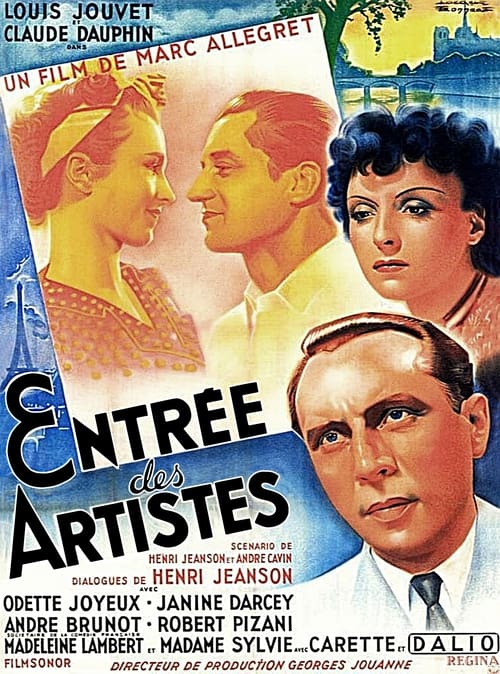
Heart of Paris
1937
No user ratings available yet
Representation score: 2.0 out of 10
Representation Score
Limited
1938
Director
Marc Allégret
Runtime
99 minutes
Average Rating
No ratings yetNew Showbiz Analysis
The film functions as a character-driven study emphasizing personal passion and romantic tension. While it doesn't delve into modern multi-layered themes, it offers a nuanced exploration of professional ambition through its main character. The demographic scope is constrained by the historical context of 1938 France, leading to a homogeneous cast. The narrative leans on established social structures and traditional romantic frameworks rather than challenging them. Overall, the work effectively uses the metaphor of performance to explore complex human emotions, even while staying within conventional social norms.
Category Breakdown
The story focuses on traditional romantic relationships and intense love stories. There is no indication of queer undertones or non-cisgender identities.
Isabelle is portrayed as a driven professional and a successful artist at the Conservatory. Her intellectual achievements challenge traditional views of women as passive.
Set in 1938 Paris, the film reflects the demographic uniformity of its time. The cast and setting show no signs of racial or ethnic diversity.
The film examines the contrast between disciplined art and the absurdities of life. It adheres to the traditional Western framework of a formal French institution.
There is no information about the depiction of physical or neurodivergent disabilities in this work.
Present on Screen
Limited or Absent
Official Synopsis
1938, France, Paris, at the Superior Conservatory of Dramatic Art ("Conservatoire Supérieur d'Art Dramatique"). The first-year entrance exams are in full swing. Many applicants, few accepted. Isabelle (Janine Darcey) is one of the few chosen. She joins former students from the second and third years, including François (Claude Dauphin) and Cécilia (Odette Joyeux). They attend the drama class run by Professor Lambertin (Louis Jouvet). The young people, passionate and eager to become comedians, clash in tumultuous love affairs, because by dint of acting, they imagine that life is a farce. François, for example, is in love with Isabelle, who also loves him, but is pursued by Cecilia, his former mistress... "Put art in your life and life in your art!"
1937
1938

1955
1949
1938

2023
1934
1951
No reviews yet. Be the first to share your thoughts on this movie!
Use the rating form above to leave a star rating and optional review.