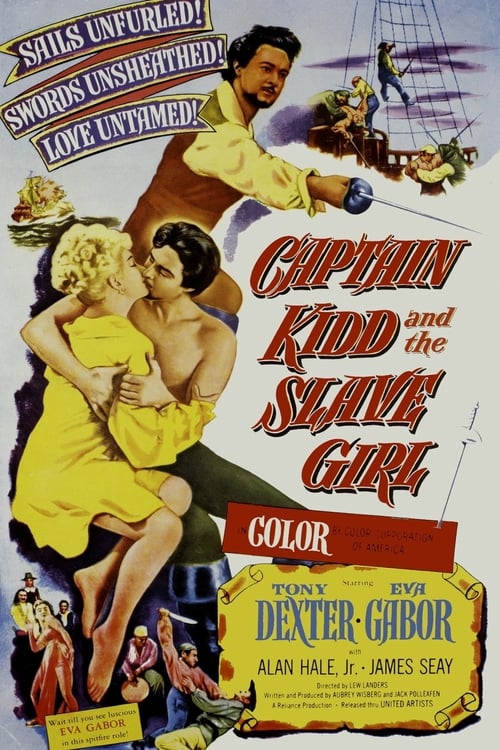
Captain Kidd and the Slave Girl
1954
No user ratings available yet
Representation score: 0.3 out of 10
Representation Score
Minimal
1947
ApprovedDirector
Lew Landers
Runtime
62 minutes
Average Rating
No ratings yetNew Showbiz Analysis
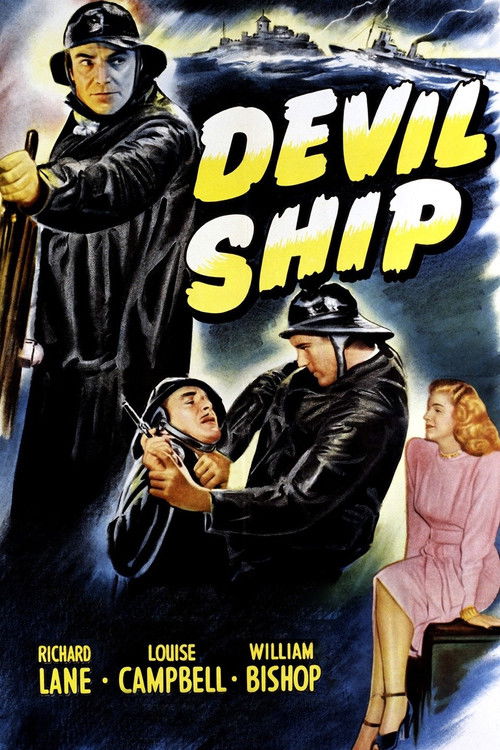
Devil Ship is a quintessential product of its era, functioning as a traditional adventure piece that reinforces mid-century social norms. The narrative structure prioritizes conventional formulas over any systematic deconstruction of social hierarchies. The film centers on male leadership, heterosexual romance, and a clear distinction between lawful citizens and criminals. It lacks the intentionality needed to challenge the social norms of the 1940s. Ultimately, the production adheres to the established social structures of its time, offering a non-subversive cinematic experience that lacks depth in representing diverse identities.
Category Breakdown
The film follows a strictly heterosexual storyline. Romantic tension revolves around the interactions between Biff Brown, Sanderson, and Madge Harris, with no characters having non-traditional gender identities.
Gender dynamics reflect mid-century standards. While Madge Harris is a central figure, her role is closely tied to the men, as the plot focuses on male-driven actions and command.
The cast reflects the homogeneous casting standards of 1940s adventure cinema. The narrative relies on Western-centric, Anglo-Saxon-dominated archetypes without significant non-white character involvement.
The story reinforces traditional Western institutional stability. It frames law and order as the necessary baseline for social stability against a disruptive criminal gang.
No characters with visible or invisible disabilities are identified within the narrative framework.
Present on Screen
Limited or Absent
Official Synopsis
Captain Biff Brown owns a boat used to ferry prisoners from the mainland to Alcatraz. The police find some escape tools on his boat and, although Brown isn't involved, his contract is terminated and he goes back to tuna fishing. Brown takes his friend Sanderson to his boarding house and introduces him to his sweetheart Madge Harris and Sanderson also falls in love with her. A gang headed by Red Mason and trying to escape the country bribe Brown's engineer, Venatti, and are hiding on the boat the next time Brown and Sanderson take it out. They take over the boat but a storm is approaching...
1954
1958
1922
1958
1957
1926

1926

1951
No reviews yet. Be the first to share your thoughts on this movie!
Use the rating form above to leave a star rating and optional review.