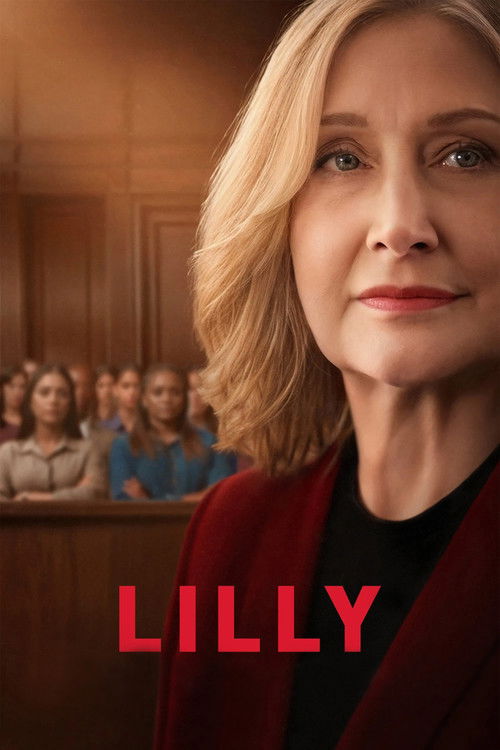
Lilly
2025
No user ratings available yet
Diversity score: 7.2 out of 10

2016
Director
Marie Noëlle
Runtime
95 minutes
Average Rating
No ratings yetSynopsis
The most turbulent five years in the life of a genius woman: Between 1905, where Maria Skłodowska-Curie comes with Pierre Curie to Stockholm to be awarded the Nobel Prize for the discovery of the radioactivity, and 1911, where she receives her second Nobel Prize, after challenging France's male-dominated academic establishment both as a scientist and a woman.
Overall Score
Good
Category Breakdown
LGBTQ+ Representation
The film focuses on heterosexual romantic and intellectual partnerships. It explores the social fallout of non-traditional domestic arrangements but lacks non-cisnormative identities or queer narratives.
Gender Representation
Marie Curie is depicted with immense intellectual agency that defies patriarchal academic structures. The film portrays her marriage as a collaborative intellectual union rather than a domestic hierarchy.
Racial & Ethnic Diversity
The story highlights the immigrant experience of a Polish woman navigating French social structures. This challenges the traditional homogeneity often found in scientific historical narratives.
Religious & Cultural Diversity
The narrative critiques the rigid moralistic social codes of the early 1900s. It frames the scientific establishment as an oppressive force against individual agency and truth.
Disability Representation
The film touches on the physical toll of scientific labor and psychological grief. However, it lacks specific depictions of neurodivergence or physical disability as central traits.
Strengths
Areas for Improvement
AI Analysis
Marie Curie (2016) is a sophisticated deconstruction of historical power dynamics. It successfully challenges the 'Great Man' theory of history by centering a woman whose intellect disrupts the established social and institutional order. The film excels in its portrayal of gendered agency and the immigrant experience within Western academia. It moves beyond simple biography to explore how intersectional barriers shape a genius's life. While the film lacks LGBTQ+ representation and specific disability narratives, its focus on subverting traditional hierarchies provides a rich, nuanced character study.
2025

2018

2019

2019
1986
2019

2008

2011
2017
2016
2021
2018
No reviews yet. Be the first to share your thoughts on this movie!
Use the rating form above to leave a star rating and optional review.