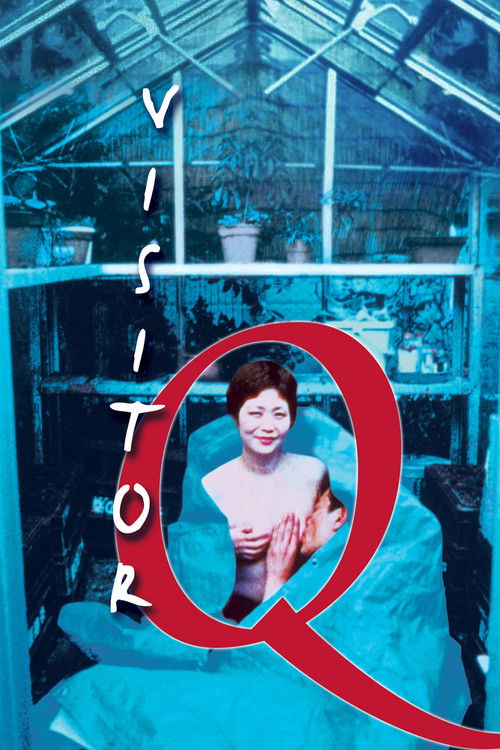
Visitor Q
2001
No user ratings available yet
Representation score: 5.0 out of 10

Representation Score
Good
2017
UnratedDirector
Eiji Uchida
Runtime
95 minutes
Average Rating
No ratings yetNew Showbiz Analysis
Eiji Uchida moves away from his typical romantic comedies to explore the friction between insular social units and rigid mainstream expectations. The film uses the protagonist's history within a cult to critique the stability of modern social institutions. While the film excels at challenging social norms through its cultural critique, it remains neutral on specific identity politics like LGBTQ+ representation. The narrative functions primarily as a character study of social alienation and the difficulty of reintegration.
Category Breakdown
The film does not explicitly address queer identities or non-straight relationships. Its focus remains on the tension between the commune and mainstream society.
A female protagonist drives the psychological journey. She plays a significant role as she transitions from a controlled communal environment to an autonomous existence in the outside world.
As a Japanese production, the film focuses on localized social dynamics. It does not present a diverse racial background.
The film explores themes by breaking down traditional social integration. It uses a fringe cult structure to challenge the perceived correctness of standard civic norms.
The protagonist's struggle to fit in may touch upon neurodivergent experiences. However, there is no explicit confirmation of a diagnosed disability or specific disability-driven plot.
Present on Screen
Limited or Absent
Official Synopsis
Ai's mother sends her to live with a cult commune, where she remains for seven years. After the cult is broken up by the police, Ai struggles to fit in with society.
2001

2018

2016
1996
2003

2012

2018

2007
No reviews yet. Be the first to share your thoughts on this movie!
Use the rating form above to leave a star rating and optional review.