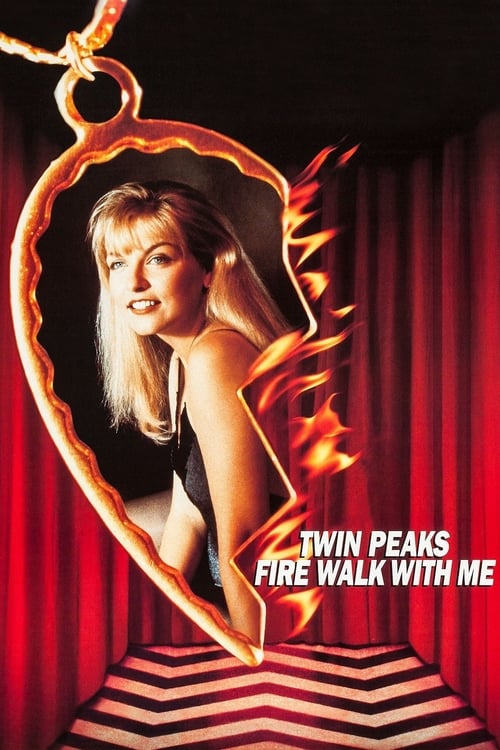
Twin Peaks: Fire Walk with Me
1992
No user ratings available yet
Representation score: 6.5 out of 10
Representation Score
Good
1989
Director
David Lynch
Runtime
116 minutes
Average Rating
No ratings yetNew Showbiz Analysis
Twin Peaks serves as a postmodern deconstruction of the American Dream, emphasizing narrative subversion over broad demographic representation. The film uses surrealism to reveal the underlying issues in small-town life. Its strength lies in its critique of Western institutions and the 'ideal' American small town. The film challenges traditional moral certainties and social stability through a lens of spiritualism and moral ambiguity. However, Twin Peaks lacks significant LGBTQ+ and racial diversity. The demographic composition remains largely homogeneous, reflecting the era's social constraints rather than engaging with diverse backgrounds.
Category Breakdown
The film explores repressed desires within the town's social layers, but it lacks characters who take active roles in driving the story. This limits the visibility of LGBTQ+ themes.
The movie centers on the complex psychological experiences of women, challenging the traditional male-dominated narrative. Female characters are shown to be intellectually and intuitively important to the plot.
The cast is primarily white, reflecting the demographics of a 1980s Pacific Northwest town. The film does not prioritize diverse perspectives or explore multiple racial backgrounds.
The work deconstructs the idealized image of an American small town by focusing on spiritualism and moral relativism. Traditional religious institutions are portrayed as fronts for corruption.
Psychological trauma and mental instability are used as atmospheric tools or plot drivers. However, there is a lack of explicit representation of disabilities where characters have real control over their lives.
Present on Screen
Limited or Absent
Official Synopsis
An idiosyncratic FBI agent investigates the murder of a young woman in the even more idiosyncratic town of Twin Peaks. (This standalone version of the series pilot was produced for the European VHS market and has an alternate, closed ending.)
1992
2014
1998
2009
1996
1992
1986
1999
No reviews yet. Be the first to share your thoughts on this movie!
Use the rating form above to leave a star rating and optional review.