Mulholland Drive
2001
No user ratings available yet
Representation score: 8.9 out of 10
Representation Score
Excellent
1999
Director
David Lynch
Runtime
88 minutes
Average Rating
No ratings yetNew Showbiz Analysis
David Lynch’s work excels at challenging traditional social and industrial hierarchies through a sophisticated, postmodern lens. By centering queer intimacy and women's ability to drive the story, the film effectively challenges assumptions about straight relationships and male dominance. However, the film's impact is limited by a lack of racial diversity, as the cast remains predominantly white to reflect a specific Hollywood environment. Despite this, the film's progressive themes are still impactful. Ultimately, the film's strength lies in its psychological depth and its critique of systemic power. It uses identity fragmentation to disrupt conventional storytelling, though its portrayal of disability remains rooted in surrealism.
Category Breakdown
The film focuses on a strong romantic and sexual relationship between two female protagonists. This queer intimacy is central to their emotional growth rather than being a side plot.
The story challenges traditional gender roles by emphasizing women's ability to drive the story, professional ambition, and psychological complexity. It explores female identity through a fragmented perspective, moving away from the usual male viewpoint.
The cast is primarily white and Anglo-Saxon, reflecting the insular nature of the Hollywood studio system. The film lacks significant diversity or color-blind casting elements.
The narrative sharply critiques the predatory 'Hollywood Dream Machine' through a fractured structure, deconstructing the concept of a single, objective morality within capitalist institutions.
The film examines neurodivergence and psychological fragmentation through characters experiencing mental health crises. However, these experiences are portrayed through surrealist dream logic rather than direct representation of lived disability.
Present on Screen
Limited or Absent
Official Synopsis
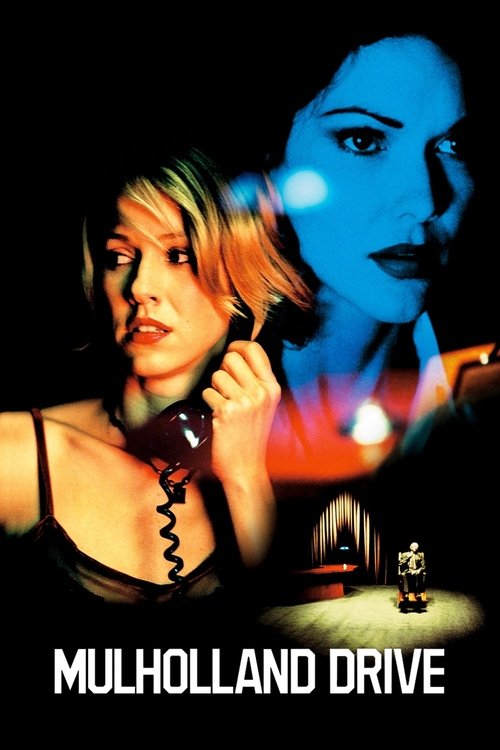
Initially, "Mulholland Dr." was to mark David Lynch's return to television. It is a retooling of a script originally shot as a 94-minute pilot for a TV series (co-written with TV screenwriter Joyce Eliason) for the channel ABC, which had approved the script, but chose not even to air the pilot once it was done in 1999, despite Lynch's labours to cut the project to their liking. It was left in limbo until 18 month later French company Studio Canal Plus (also producer of 'The Straight Story') agreed to pay ABC $7 million for the pilot, and budget a few million more to turn the pilot into a two-hour, 27-minute movie. The cost of the film doubled to $14 million as sets had to be reconstructed and actors recalled.
2001
1989
2014
1976
1997
1959
2006
1945
No reviews yet. Be the first to share your thoughts on this movie!
Use the rating form above to leave a star rating and optional review.