The Noisy Requiem
1988
No user ratings available yet
Diversity score: 5.0 out of 10
1963
Director
Kazuo Inoue
Runtime
118 minutes
Average Rating
No ratings yetSynopsis
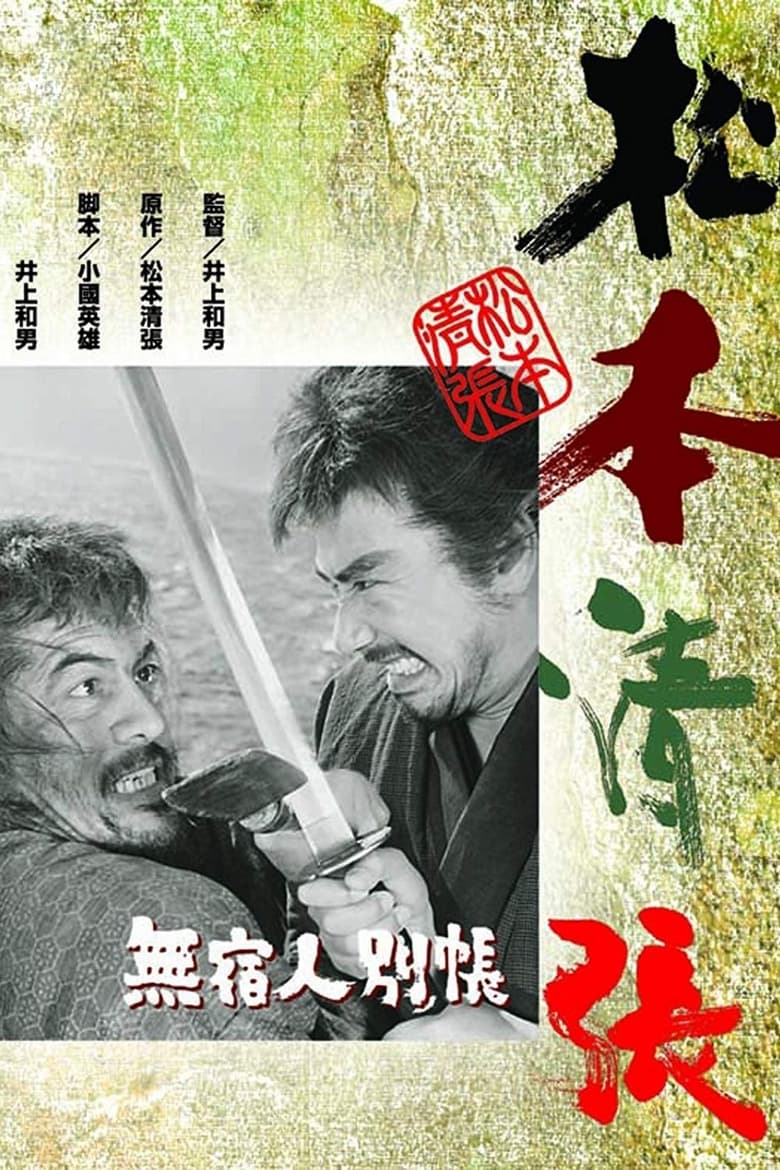
This suspense drama set in the mid 1700's depicts the plan of the Tokugawa rulers to send a number of homeless men to a remote island Sado to perform forced labor. Living conditions on the island are terrible and the men soon become rebellious. Based on a short story by Seichō Matsumoto.
Overall Score
Fair
Category Breakdown
LGBTQ+ Representation
The film lacks explicit evidence of LGBTQ+ characters or non-heteronormative identities. The narrative focuses almost entirely on the collective struggle of a displaced male population.
Gender Representation
The story is heavily centered on a male-dominated social stratum of homeless men. There is no evidence of women occupying roles of intellectual or structural authority.
Racial & Ethnic Diversity
The cast is ethnically homogeneous, reflecting its Japanese Tokugawa-period setting. However, it uses the protagonists' homeless status to explore class-based distinctions and social stratification.
Religious & Cultural Diversity
The film offers a sophisticated critique of state authority and institutional power. It depicts the Tokugawa rulers' forced labor system as an oppressive structure that triggers rebellion.
Disability Representation
The characters' status as homeless individuals implies a state of physical and social vulnerability. However, there is no evidence of characters with disabilities possessing specific agency.
Strengths
Areas for Improvement
AI Analysis
Escape from Hell is a period drama that prioritizes social critique over demographic breadth. While the cast is ethnically homogeneous, the film finds depth in the struggle of the disenfranchised against systemic oppression. The narrative is heavily gendered, focusing on a masculine framework of forced labor and rebellion. This lack of gender diversity is typical for the genre and historical setting, though it limits the scope of the social commentary. Ultimately, the film's strength lies in its anti-authoritarian themes. It transforms marginalized individuals from passive subjects into agents of resistance, providing a nuanced look at class and systemic victimhood.
1988
1983
1960
1955
1967
1991

1988
1966

1955
1947

1976
1974
No reviews yet. Be the first to share your thoughts on this movie!
Use the rating form above to leave a star rating and optional review.