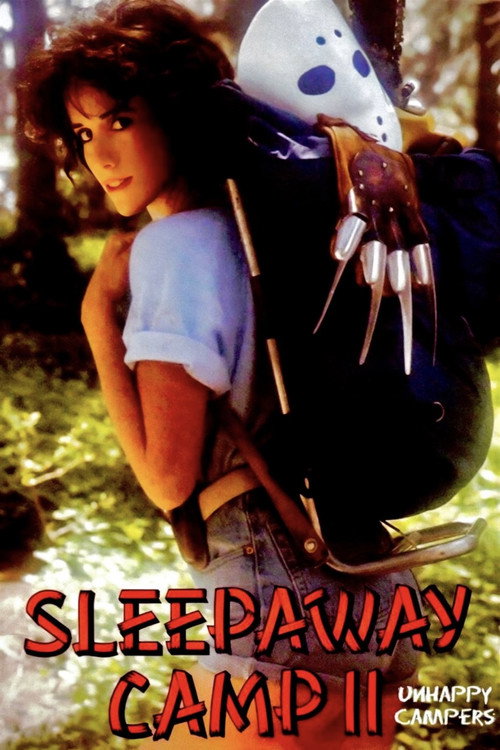
Sleepaway Camp II: Unhappy Campers
1988
No user ratings available yet
Representation score: 4.0 out of 10

Representation Score
Limited
1989
RDirector
Michael A. Simpson
Runtime
79 minutes
Average Rating
No ratings yetNew Showbiz Analysis
Sleepaway Camp III: Teenage Wasteland is a genre-driven slasher that prioritizes visceral horror clichés over social commentary. While the premise of an experimental camp for different social classes hints at class dynamics, the film remains tied to conventional 1980s casting and narrative structures. The film fails to engage with disability, neurodivergence, or LGBTQ+ identities, sticking strictly to traditional adolescent archetypes. Its approach to gender is centered on the survivalist dynamics of the slasher genre rather than challenging established hierarchies. Ultimately, the work reflects the standard demographic norms of its era. It lacks the depth required to challenge systemic social structures, functioning instead as a straightforward piece of survival horror.
Category Breakdown
The film does not include any identifiable LGBTQ+ characters or non-cisgender identities. It follows the assumption that everyone is straight and cisgender, focusing on adolescent archetypes typical of 1980s slashers.
While the antagonist Angela plays a significant role in driving the story, female characters are often portrayed as victims. The film relies on the 'Final Girl' cliché without challenging patriarchal structures.
The film introduces socioeconomic layers by integrating privileged and lower-class youths. However, the casting remains largely consistent with era-specific norms and lacks significant depth in reflecting multiple aspects of diversity.
Narrative elements focus on teenage delinquency and rebellion rather than critiquing Western institutions. The film operates as a traditional survival horror without a clear ideological stance.
There is no representation of visible or invisible disabilities. Characters are defined by physical vitality and typical adolescent archetypes throughout the story.
Present on Screen
Limited or Absent
Official Synopsis
Psychotic Angela is itching to do what she does best: slaughter dozens of teenage campers. As luck would have it, the previous site of her murders has been renamed and converted into an experimental summer camp meant to bring together privileged and lower-class teens. On the day the youths are boarding the buses to camp, Angela runs over a potential camper with a garbage truck and assumes her identity. Once she has infiltrated the camp, the real terror begins.
1988
1986

2004
1988

1987
1988

1987

1995
No reviews yet. Be the first to share your thoughts on this movie!
Use the rating form above to leave a star rating and optional review.