
Transformers: The Return of Optimus Prime
1987
No user ratings available yet
Representation score: 1.3 out of 10
Representation Score
Minimal
2026
Director
Joshua Wassung
Runtime
12 minutes
Average Rating
No ratings yetNew Showbiz Analysis
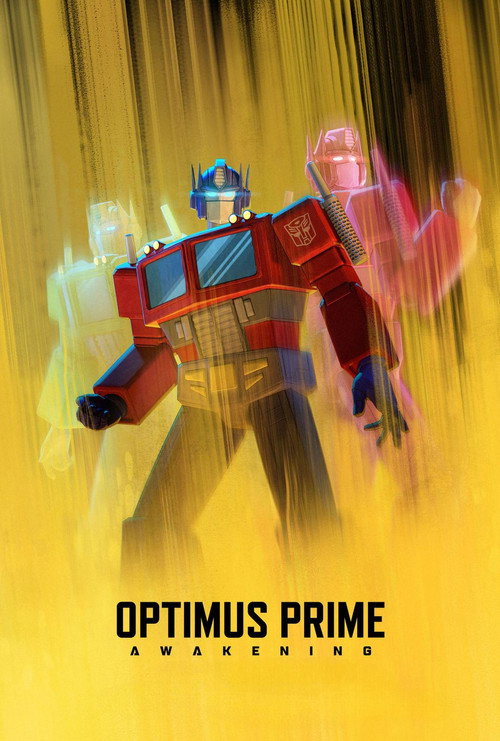
The film opens in an afterlife where Optimus Prime, the weary leader, is confronted by "The One," a supernatural entity who reveals that his endless cycle of dying and rising only prolongs a war that destroys more life than it saves. This is a 2026 animated short that uses the familiar Transformers mythology to interrogate the cost of heroic duty, positioning Optimus’s traditional commitment to the Matrix of Leadership as the very thing keeping him trapped in a loop of violence. The sold meaning is that the hero’s obsession with power and protection is a form of self-deception; the camera lingers on Optimus’s guilt as he sees visions of Bumblebee, his own friend, berating him for leading them into a losing battle. The contradiction lies in the resolution: Optimus is told to "break the cycle" by giving up his role, yet the final image shows him discarding the Matrix only to leave through a glowing doorway to "light their darkest hour," implying that his duty is not abandoned but transcended. The film argues that true leadership requires letting go of the symbol of power, yet it rewards the return to the fight, suggesting that the cycle is not broken but merely paused. The last image is a moral verdict on the nature of heroism: it is not about winning, but about enduring the weight of choice, even when that choice leads back to the same war.
Category Breakdown
Absent. The narrative focuses entirely on the conflict between Optimus Prime and Megatron, with no same-sex intimacy, romantic subplots, or queer-coded identities depicted in the afterlife visions or final confrontation.
Limited. The cast is exclusively male robots; gender is unmarked and irrelevant to the hierarchy of power. Optimus Prime’s authority rests on his role as leader rather than traditional masculinity, yet the dynamic remains a binary struggle between two male figures for control of the Matrix.
Absent. The characters are non-human constructs with no racial or ethnic attributes. The human hand briefly seen in a vision is a symbolic transformation, not a representation of human diversity or racial identity within the story’s social structure.
Contested. The film critiques the "heroic" cycle of endless war, suggesting that Optimus’s adherence to duty and leadership prolongs destruction. It frames traditional heroic sacrifice as a trap, urging a break from the cycle of conflict, yet ultimately rewards the return to duty to "light their darkest hour."
Absent. No characters possess physical impairments, neurodivergence, or disability as a narrative element. The brief transformation of Optimus’s hand into a human one is a metaphysical symbol of mortality, not a depiction of disability or physical difference.
Present on Screen
Limited or Absent
Official Synopsis
An animated epilogue to The Transformers: The Movie (1986) and the final performance of Peter Cullen.
1987

1987

2012

2021
1986
1986
2017

1992
No reviews yet. Be the first to share your thoughts on this movie!
Use the rating form above to leave a star rating and optional review.