New Showbiz

You are here:

No Poster Available

Transformers: The Return Of Optimus Prime

1987

Director

Ray Lee, Andy Kim

Runtime

45 minutes

Average Rating

No ratings yet

Synopsis

When Scientists discover Sun Spores, an alien plague that instills a hatred so overwhelming that anyone infected won't stop until everything in their path is destroyed. Soon, the scientists decide that it's time to rid the Earth of the Transformers and plan to use Optimus Prime's lifeless body to lure every Transformer to their lab and infect them with the Sun Spores. When the Sun Spores outbreak rages out of control, the universe's only hope is to revive Optimus Prime. But even if Optimus recovers, he and his Autobots will need to rely on Galvatron and the remnants of his Decepticons to help reclaim the Autobot Matrix of Leadership from an infected Rodimus Prime and use it to unleash a new Golden Age of Cybertron.

Where to Watch

Diversity & Representation

Overall Score

2.9/10

Limited


Category Breakdown

LGBTQ+ Representation

Minimal

The narrative focuses entirely on a cosmic struggle involving an alien plague and leadership artifacts. There is no evidence of non-heteronormative identities or same-sex intimacy.

Gender Representation

Limited

The story centers on the revival of Optimus Prime, a traditionally masculine figure of authority. The plot relies on male-coded archetypes of strength and command without showing female agency.

Racial & Ethnic Diversity

Fair

Race is abstracted through non-human species and alien designations. The narrative prioritizes a binary conflict between destroyers and saviors rather than providing intersectional character depth.

Religious & Cultural Diversity

Limited

The film follows a classic good versus evil framework common in 1980s animation. It reinforces traditionalist narratives of heroism and the defense of an established order.

Disability Representation

Minimal

There is no mention of neurodivergence or physical disabilities. The alien plague serves as a plot device rather than a nuanced exploration of lived experience.

Strengths

  • Uses non-human species as a potential metaphor for diversity.
  • Provides a clear, high-stakes cosmic conflict for the audience.

Areas for Improvement

  • Lacks female characters exercising agency or leadership.
  • Fails to include representation for neurodivergence or physical disabilities.
  • Relies on traditionalist, male-coded heroic archetypes.
  • Does not explore non-heteronormative identities or social subversion.

AI Analysis

The film adheres to a traditionalist narrative structure typical of 1980s action animation. It focuses on archetypal heroism and the restoration of a central authority figure to resolve cosmic conflict. Representation is limited by a reliance on conventional genre tropes. The story centers on masculine leadership and binary conflicts, lacking the intersectional complexity or subversion of power hierarchies found in more modern works. Because the characters are non-human entities, traditional markers of race and culture are replaced by species-based designations. This abstraction results in a narrative that prioritizes high-stakes sci-fi action over social or identity-driven depth.

How are these scores produced? →

Similar Movies

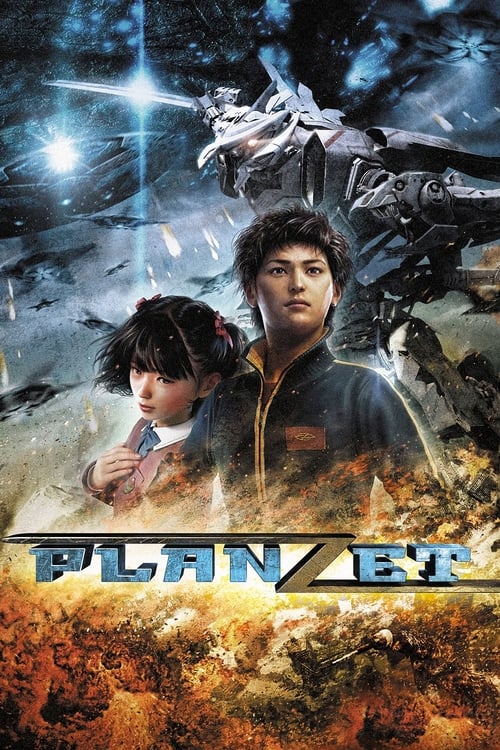
Movie poster for Planzet

Planzet

2010

No user ratings available yet
Diversity score: 2.9 out of 10
Movie poster for Majestic Prince: Genetic Awakening

Majestic Prince: Genetic Awakening

2016

No user ratings available yet
No diversity score available

Rate this Movie

No rating selected
Use arrow keys to select a rating from 1 to 5 stars
Optional text review, maximum 2000 characters
Tip: Wrap spoilers with ||double pipes|| to hide them
0/2000 characters
You must be signed in to submit a rating

Reviews

No reviews yet. Be the first to share your thoughts on this movie!

Use the rating form above to leave a star rating and optional review.