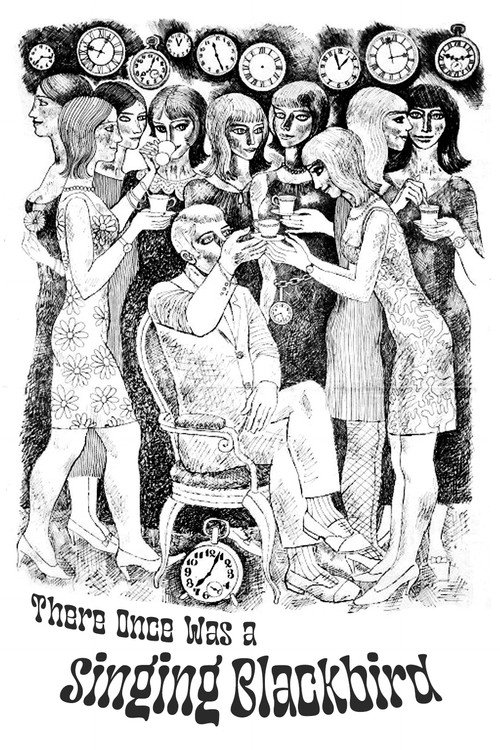
There Once Was a Singing Blackbird
1970
No user ratings available yet
Representation score: 5.7 out of 10

Representation Score
Limited
1953
Director
Anwar Wagdi
Runtime
115 minutes
Average Rating
No ratings yetNew Showbiz Analysis
The film opens on the sun-drenched streets of Cairo, where Wahid, a vagabond musician, stumbles upon an abandoned baby. This chance encounter sets in motion a Chaplinesque journey of survival and moral fortitude, positioning Wahid as the archetypal decent man against the backdrop of a vibrant, working-class city. The sold meaning is clear: integrity and simplicity are superior to the hollow excess of the wealthy elite. Wahid’s persistence and moral clarity are rewarded, while Mounir Bey, the sophisticated but cold antagonist, is reduced to a punchline, his downfall played for comic effect. The camera loves Wahid’s earnest expressions and Dahab’s moments of vulnerability, framing her beauty as the ultimate validation of his worth. The visual design reinforces this hierarchy, contrasting Wahid’s simple clothing with the elaborate attire of the rich, treating the former as a virtue and the latter as a vice. The ending resolves the romantic tension, rewarding Wahid’s character over capital and affirming a traditional moral order where the working-class hero triumphs. As a 1953 Egyptian comedy musical, *Dahab* captures the era’s fascination with star power and social mobility. Fayrouz, the child wonder, shines as Dahab, her talent and charm anchoring the film’s appeal. The narrative does not challenge the gender dynamics of the time; instead, it reinforces them, with Dahab as the prize and Wahid as the provider. The film’s argument is straightforward: moral worth is inherent, not determined by social status. The last image settles on Wahid’s social ascension, a testament to the enduring power of character over wealth in the eyes of the camera.
Category Breakdown
The narrative relies exclusively on heterosexual romance between Wahid and Dahab. No same-sex intimacy or non-heteronormative identity is depicted or implied.
Wahid functions as the competent moral center, while Dahab serves as the glamorous prize whose choice validates his worth. The wealthy male antagonist is mocked for his ineptness, yet the woman remains an object of desire rather than an active agent.
The cast is entirely Egyptian, reflecting the film’s local setting without broader ethnic diversity. Class dynamics mirror social hierarchies, but no racial allegory or cross-cultural tension is presented.
The film treats working-class integrity as a superior virtue over elite wealth, framing Wahid’s simplicity as moral. Traditional family and romantic unions are upheld as the ideal resolution, with no critique of secular or institutional structures.
No characters display physical or cognitive impairments. The narrative focuses on class and romance, offering no depiction of disability or medical conditions.
Present on Screen
Limited or Absent
Official Synopsis
Anwar Wagdi plays vagabond musician Alfredo, who comes across an abandoned baby in the night. He tries his best to get our heroes someone to take it and raise it. When that fails, he has no choice but to raise it on his own. He names the child, Dabab, after the beautiful woman he's encountered on the street. Years pass and Dahab grows up to be the Faryuz, who is actually cute, talented and far less grating than our Ms. Temple. Many Chaplinesque hijinks ensue as Alfredo and Dahab play music on the streets, try to scam free food wherever they can and convince the owner of a successful nightclub to let Dahab perform.
1970

1921
1990

1950
1960
1961
2002
1974
No reviews yet. Be the first to share your thoughts on this movie!
Use the rating form above to leave a star rating and optional review.