Vigo
1998
No user ratings available yet
Representation score: 5.9 out of 10
Representation Score
Good
1993
UnratedDirector
Gérard Mordillat
Runtime
90 minutes
Average Rating
No ratings yetNew Showbiz Analysis
The film functions as a gritty character study that rejects sanitized or moralistic depictions of its subjects. It finds its depth in the friction of mental instability and the rejection of bourgeois stability. While the narrative lacks racial diversity, it offers a sophisticated exploration of mental health and the deconstruction of social norms. It prioritizes the psychological truth of its characters over traditional domestic or social structures.
Category Breakdown
The film explores unconventional relationships within a bohemian lifestyle. It challenges traditional domesticity through intense, non-traditional bonds, though it doesn't explicitly confirm same-sex relationships.
The narrative avoids idealized femininity by portraying women like Rolande and Jany through complex, non-traditional lenses. It focuses on the psychological chaos surrounding the male protagonist.
The story centers on a predominantly Eurocentric, white intellectual circle. It reflects the specific demographic realities of 1946 Paris without showing significant racial blending.
The film challenges social norms by framing madness and drug use as integral to artistic pursuit. It prioritizes subjective morality and the deconstruction of traditional social order.
Artaud’s neurodivergence is treated as a central, driving force rather than a mere plot device. The narrative gives him real power in how his mental state reshapes his environment.
Present on Screen
Limited or Absent
Official Synopsis
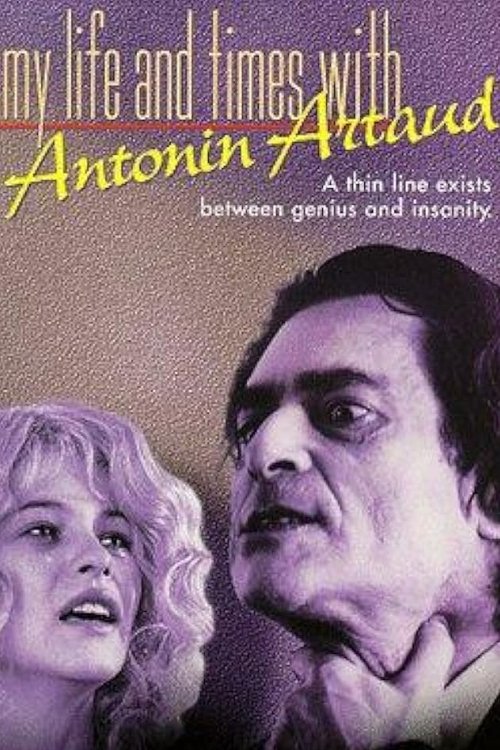
May, 1946, in Paris young poet Jacques Prevel meets Antonin Artaud, the actor, artist, and writer just released from a mental asylum. Over ten months, we follow the mad Artaud from his cruel coaching of an actress in his "theatre of cruelty" to his semi-friendship with Prevel who buys him drugs and hangs on his every word. Meanwhile, Prevel divides his time between Jany, his blond, young, drug-hazed mistress, and Rolande, his dark-haired, long-suffering wife, who has a child during this time. Cruelty, neglect, poverty, egoism, madness, and the pursuit of art mix on the Left Bank.
1998
1991
1969
1982

2017
1996
1972
1952
No reviews yet. Be the first to share your thoughts on this movie!
Use the rating form above to leave a star rating and optional review.