
Louisiana Story
1948
No user ratings available yet
Representation score: 1.9 out of 10
Representation Score
Fair
1976
GDirector
Chris Prentiss
Runtime
97 minutes
Average Rating
No ratings yetNew Showbiz Analysis
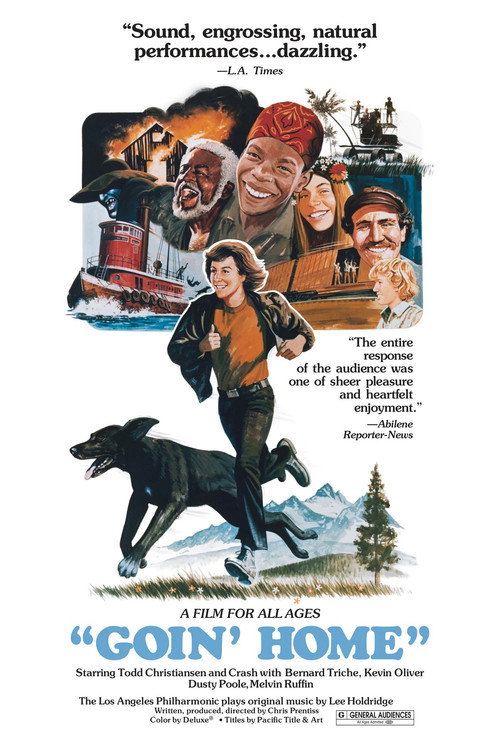
Goin’ Home follows a traditional mid-70s adventure-drama structure, focusing on a boy and his dog traveling from Florida to California. The narrative relies on established social archetypes, such as a shoeshine man and a hobo, to populate the journey. While the film touches on themes of exclusion and trauma, it does not significantly challenge systemic hierarchies. Diverse characters are included but may feel more like standard elements of the road movie genre rather than deep explorations of intersecting identities. Ultimately, the film offers a moderate level of inclusion through its secondary characters but remains anchored in conventional, male-dominated storytelling.
Category Breakdown
The film does not include any characters with LGBTQ+ identities or non-assuming gender matches what was assigned at birth genders. The story revolves around a child and his dog’s journey.
The story centers on a young boy and includes several male characters. Female characters have limited roles and influence.
A New Orleans shoeshine man adds some racial diversity, though he seems to serve as a traditional archetype rather than a fully developed character.
The film uses road movie clichés and focuses on social outsiders like hobos. It leans towards traditional sentimentality rather than challenging societal norms.
A character who is a victim of abuse introduces themes of psychological trauma. It is unclear whether this character has real ability to act or simply serves a plot function.
Present on Screen
Limited or Absent
Official Synopsis
After his dog is accused of biting a child, the boy and the animal leave Florida for California. Along the way they encounter a New Orleans shoeshine man, another boy (who is a victim of abuse) and an insightful hobo.
1948
1943

1995

1986

1952

1985
1972
1957
No reviews yet. Be the first to share your thoughts on this movie!
Use the rating form above to leave a star rating and optional review.