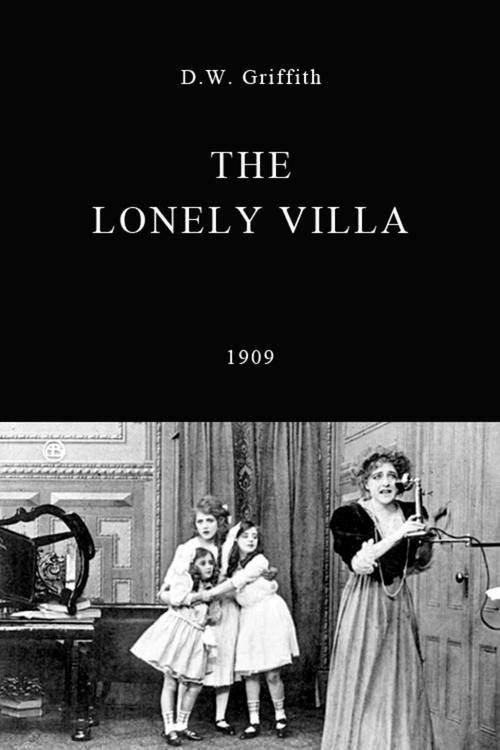
The Lonely Villa
1909
No user ratings available yet
Representation score: 0.4 out of 10
Representation Score
Minimal
1909
Director
D.W. Griffith
Runtime
9 minutes
Average Rating
No ratings yetNew Showbiz Analysis
The film functions as a moralistic melodrama that reinforces the social hierarchies of its era. It relies on binary archetypes—the 'provident' provider versus the 'scoundrel' antagonist—to drive its tension. There is a complete absence of diverse identities or multi-layered depth. The narrative is built entirely around preserving the traditional nuclear family and punishing anti-social behavior. Ultimately, the work offers no disruption of period-specific norms, instead upholding established gender roles and Western domestic structures as the standard for morality.
Category Breakdown
The film focuses on a traditional domestic unit consisting of a husband, wife, and infant. There is no evidence of non-straight relationships or same-sex intimacy.
Gender roles follow strict early 20th-century archetypes. The husband is defined by economic stability, while the wife's role is limited to brief domestic movements.
The setting and cast reflect a homogeneous social environment. There is no indication of non-white or non-Anglo-Saxon representation within the narrative.
The story reinforces conventional Western values regarding industriousness and familial sanctity. It positions the nuclear family as the moral baseline of the film.
No characters with physical, sensory, or neurodivergent disabilities are present. The infant serves as a plot device rather than a character with significant influence.
Present on Screen
Limited or Absent
Official Synopsis
Antonine, a worthless, good-for-nothing scoundrel, demands money of his cousin Galora, an energetic, provident husband and father. His demands are met with a positive rebuff, and when he becomes insistent be is forcibly ejected by Galora. As he leaves the tenement he vows to get even, and lies in wait until Galora has gone out on business. Climbing to the fifth floor, on which the Galoras live, he watches his chance, which comes when Mrs. Galora goes for an instant to visit a neighbor on the same floor. Darting into the apartment and raising the window he perceives the awful result of a drop to the ground, five stories below, and so evolves a plan that is dastardly in the extreme. Taking the infant child from the cradle, and placing it in a basket he lets it out with a short rope, the end of which he secures by letting the sash down on it, so that to raise the window would precipitate the baby to destruction.
1909
1920

1911
1909
1912
1908
1910

1912
No reviews yet. Be the first to share your thoughts on this movie!
Use the rating form above to leave a star rating and optional review.